

Table of Contents
- Natural vs Synthetic Fabrics: Core Differences
- Durability and Longevity: Which Lasts Longer
- Breathable Fabrics for Summer: Natural and Synthetic Options
- Comfort, Skin Health, and Hypoallergenic Properties
- How to Care for Natural Fibers and Maintain Quality
- Environmental Impact and Sustainability
- Blended Fabrics: Getting the Best of Both Worlds
- Lifecycle Cost: What You Actually Pay Over Time
Last Updated: August 25, 2026
Natural vs Synthetic Fabrics: Core Differences
Understanding what separates natural and synthetic fabrics is the foundation for making smarter wardrobe decisions that align with your lifestyle.
What Natural Fibers Are
Natural fibers come directly from plants, animals, or mineral sources. Cotton, wool, silk, and linen are the most common options in everyday clothing. Cotton is soft, absorbent, and breathes well, making it ideal for t-shirts and summer basics. Wool offers natural temperature regulation and moisture-wicking properties. Silk and linen are prized for their luxurious feel and exceptional breathability.
The key characteristic of natural fibers is their biodegradability, they break down naturally over time rather than persisting in landfills for decades.
What Synthetic Fibers Are
Synthetic fibers are petroleum-based materials engineered in laboratories. Polyester, nylon, acrylic, and spandex dominate this category. Polyester is the most common synthetic fiber, durable and quick-drying. Nylon offers exceptional strength and elasticity. Acrylic mimics wool's warmth at lower cost. Spandex provides stretch and recovery found in jeans and athletic wear.
The advantage of synthetics is performance consistency, they won't shrink unpredictably and resist staining. The disadvantage is environmental: synthetic polymers shed microplastics during washing and don't biodegrade, meaning a polyester shirt will likely outlast the person who bought it.
Durability and Longevity: Which Lasts Longer
Synthetic fabrics like polyester and nylon typically outlast natural fibers in sheer wear and tear, handling 100+ wash cycles without significant degradation (peer-reviewed research). However, "lasting longer" doesn't always mean "staying wearable longer." A synthetic garment might hold its structure while developing pilling or a stiff feel after 50 washes, while quality cotton softens with age and becomes more comfortable.
Wool presents an interesting middle ground, durable against wear but requiring careful handling to avoid felting and shrinkage. Linen actually gets softer and more durable with repeated washing, which is why vintage linen pieces often feel better than new ones.
The real durability question depends on your definition. For maintaining original appearance for years, synthetics win. For aging gracefully while remaining comfortable, natural fibers often deliver better long-term satisfaction. ETHOS CONCEPT's approach focuses on pieces designed to be worn repeatedly and cared for properly, which extends the life of both natural and blended fabrics significantly.
Breathable Fabrics for Summer: Natural and Synthetic Options
Natural fibers dominate breathability. Cotton and linen are the gold standard for summer because their cellular structure naturally allows air circulation and moisture absorption. Linen absorbs moisture 20% faster than cotton and dries more quickly, making it ideal for hot, humid climates (peer-reviewed research). Silk also breathes exceptionally well and provides temperature regulation.
The synthetic option that comes closest is moisture-wicking polyester, often used in athletic wear. These engineered synthetics pull sweat away from your skin and facilitate evaporation, but they work through a different mechanism than natural fibers. For intense activity, this can feel superior. For casual everyday wear in summer heat, most people find the natural absorption of cotton or linen more comfortable.
Viscose and rayon, semi-synthetic fibers made from wood pulp, offer a middle path, breathing nearly as well as cotton while providing some durability benefits of synthetics.
Comfort, Skin Health, and Hypoallergenic Properties
Natural fibers have a reputation for comfort because they don't create static electricity or trap heat the way synthetics can. Your skin can "breathe" against natural fabrics in a literal sense.

For people with sensitive skin or conditions like eczema, natural fibers are often recommended by dermatologists (the American Academy of Dermatology). Merino wool is gentle enough for sensitive skin. Silk is hypoallergenic and doesn't trigger reactions in most people. Cotton is mild and unlikely to cause irritation, though conventional cotton is often treated with chemical finishes that can bother sensitive skin.
Synthetic fibers can trap heat and moisture against your skin, creating an environment where bacteria and fungi thrive. However, synthetic blends designed for athletic performance often include antimicrobial treatments that counteract this tendency.
Odor retention differs between fabrics. Natural fibers absorb moisture and can develop odor if not dried quickly. Synthetics repel moisture but can trap odor molecules in the polymer structure, making them difficult to eliminate even after washing.
How to Care for Natural Fibers and Maintain Quality
Natural fibers require more intentional care than synthetics, but the payoff is garments that feel better and last longer when treated properly. Cotton should be washed in cool water with gentle detergent and dried on low heat or air-dried to prevent shrinkage. Wool requires cold water and specialized wool detergent. Linen can be line-dried without damage. Silk should be hand-washed in cool water with silk-specific soap, then air-dried away from direct sunlight.
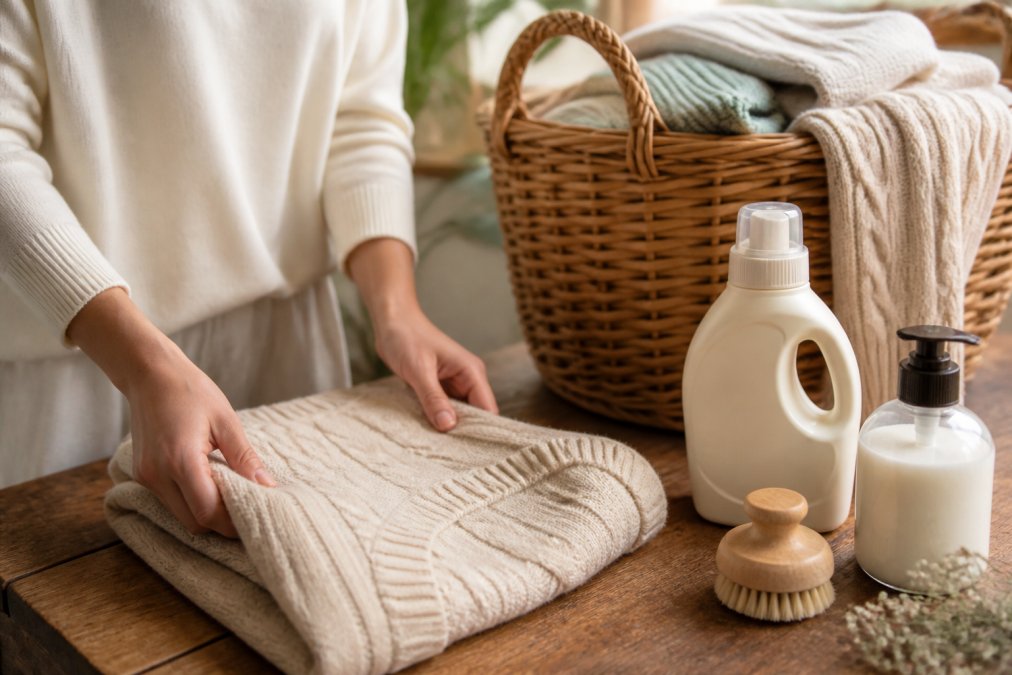
The common mistake is treating natural fibers like synthetics. Throwing a wool sweater in the dryer on high heat or washing linen in hot water guarantees damage. These fibers respond well to proper care, improving with time rather than degrading.
Pilling, those small balls of fiber that form on fabric, happens with natural fibers, particularly cotton and wool. A fabric shaver can remove pills without damaging the underlying garment. Storage matters too, cotton and linen should be kept in cool, dry places to prevent mildew, while wool benefits from cedar blocks or lavender sachets to deter moths.
Environmental Impact and Sustainability
The environmental footprint of natural vs synthetic fabrics is complex. Cotton production requires significant water, approximately 2,700 liters to produce enough cotton for a single t-shirt, and relies heavily on pesticides. Organic cotton addresses these concerns by eliminating synthetic pesticides. Linen and hemp require less water and fewer chemicals than cotton.
Wool production has environmental costs related to land use and methane emissions, but wool is biodegradable and requires minimal chemical processing.
Synthetic fibers are derived from petroleum, a non-renewable resource. Their biggest environmental problem emerges at the end of a garment's life, they don't biodegrade. Additionally, synthetic fabrics shed microplastics during every wash cycle, accumulating in waterways and entering the food chain.
Recycled synthetics change the equation by reducing petroleum dependency and diverting waste from landfills, though they still shed microplastics. Semi-synthetic fibers like viscose and TENCEL are made from sustainably sourced wood pulp using closed-loop production systems that recycle water and solvents.
The most sustainable choice depends on your priorities. If water conservation matters most, linen or hemp wins. If reducing landfill waste is the priority, recycled synthetics or biodegradable natural fibers are better. If durability matters, wearing a garment longer before discarding it, synthetic blends often win because they resist degradation and maintain wearability longer.
Blended Fabrics: Getting the Best of Both Worlds
Most modern clothing combines natural and synthetic fibers. A cotton-polyester blend offers the comfort and breathability of cotton with the durability and wrinkle resistance of polyester. A wool-nylon blend provides wool's warmth with nylon's strength. The ratio matters significantly, a 70% cotton, 30% polyester blend feels substantially more like cotton than a 50/50 blend.
Blends solve specific problems. Athletic wear typically combines natural fibers with synthetic moisture-wicking materials and spandex for stretch. Professional clothing often blends natural fibers with synthetics to reduce wrinkles while preserving comfort.
The trade-off is that blends complicate the sustainability equation. However, blends often last longer than pure natural fiber garments, potentially reducing overall environmental impact through less frequent replacement.
ETHOS CONCEPT's approach to blended fabrics emphasizes quality construction and thoughtful fiber selection. The Atelier Line features carefully curated pieces where the blend is intentional, chosen to enhance wearability rather than simply reduce production costs.
Lifecycle Cost: What You Actually Pay Over Time
The cheapest garment isn't always the best value. A polyester shirt from a fast-fashion brand might fall apart after 20 washes. A cotton-blend piece that lasts 100+ washes likely feels better throughout.
Lifecycle cost includes purchase price plus care and replacement frequency. A garment that maintains its appearance through 150 washes is genuinely cheaper than one that fades after 50 washes, regardless of initial price.
The real cost consideration is how long you'll actually wear something. A classic, well-made piece you'll wear for years is cheap, even if the initial investment feels high. Natural fibers and quality blends tend to be more timeless, extending their useful life and improving cost per wear.
| Factor | Natural Fibers | Synthetic Fibers | Blends |
|---|---|---|---|
| Initial Cost | Medium to High | Low to Medium | Medium |
| Durability (wear cycles) | 50-100+ | 100-200+ | 75-150+ |
| Care Requirements | Higher | Lower | Medium |
| Replacement Frequency | More often | Less often | Moderate |
| Cost Per Wear (quality pieces) | Low | Low | Low |
| Environmental Cost | Lower (biodegradable) | Higher (persistent) | Medium |
| Comfort Over Time | Improves | Stable or declines | Stable |
Choosing between natural vs synthetic fabrics for everyday wear depends on what matters most to you. If comfort and breathability are priorities, natural fibers deliver. If durability and low maintenance are essential, synthetics perform better. If you want the best of both worlds, thoughtfully designed blends offer genuine advantages.
The real opportunity lies in choosing quality pieces, whether natural, synthetic, or blended, that you'll actually wear repeatedly. ETHOS CONCEPT focuses on this principle: pieces designed for confident women who want clothing that performs, feels great, and reflects their individual style. The Atelier Line's limited-edition approach means you're investing in pieces that stay relevant because they're thoughtfully designed. When you prioritize quality and intentional construction over fast-fashion volume, the fabric choice becomes a detail in a larger commitment to getting real value from your wardrobe. That's where the real savings and satisfaction emerge.
=== FAQ ANSWERS (audit these too, same rules) ===
[1] Q: Is 100% cotton healthier than polyester for everyday wear? A: Cotton offers natural breathability and is hypoallergenic, making it gentler on sensitive skin. Polyester, a synthetic polymer, can trap moisture and heat, potentially causing discomfort in humid conditions. However, high-quality polyester blends can offer durability that pure cotton lacks. The healthiest choice depends on your skin sensitivity, climate, and activity level. Cotton excels for daily comfort, while synthetic blends work better for performance or longevity.
[2] Q: What is the best fabric to wear daily for comfort and durability? A: Blended fabrics combining natural fibers like cotton or linen with synthetic polymers such as polyester often provide the best balance. These hybrids offer cotton's breathability and comfort with synthetic durability and wrinkle resistance. For pure natural fibers, cotton and linen provide excellent breathability and comfort but require more careful maintenance. Synthetic blends reduce shrinkage and pilling while maintaining wearability. Your best choice depends on climate, skin sensitivity, and how frequently you wash and wear the garment.
[3] Q: How do synthetic fabrics impact the longevity of my clothes? A: Synthetic fabrics like polyester and nylon have higher tensile strength than many natural fibers, resisting wear and tear from repeated washing and wearing. They resist shrinkage and maintain shape better than pure cotton or wool. However, synthetics can pill more easily and may degrade under direct sunlight or heat. Blended fabrics typically outlast 100% natural fibers because synthetic polymers reinforce weak points in natural cellulose fibers. Proper care extends longevity for both types, but synthetics generally require less intensive maintenance.
[4] Q: Are there benefits to wearing synthetic blends for everyday clothing? A: Synthetic blends combine the breathability and comfort of natural fibers with the durability and wrinkle resistance of polymers like polyester. They resist shrinkage, maintain color better, and require less careful washing than 100% natural fabrics. Blends also reduce static electricity and pilling compared to pure synthetics. For busy professionals seeking garments that stay looking fresh through multiple wears and washes, blends offer practical advantages. The trade-off is slightly less breathability than 100% natural fibers, though quality blends minimize this difference.
Frequently Asked Questions
Is 100% cotton healthier than polyester for everyday wear?
Cotton offers natural breathability and is hypoallergenic, making it gentler on sensitive skin. Polyester, a synthetic polymer, can trap moisture and heat, potentially causing discomfort in humid conditions. However, high-quality polyester blends can offer durability that pure cotton lacks. The healthiest choice depends on your skin sensitivity, climate, and activity level. Cotton excels for daily comfort, while synthetic blends work better for performance or longevity.
What is the best fabric to wear daily for comfort and durability?
Blended fabrics combining natural fibers like cotton or linen with synthetic polymers such as polyester often provide the best balance. These hybrids offer cotton's breathability and comfort with synthetic durability and wrinkle resistance. For pure natural fibers, cotton and linen provide excellent breathability and comfort but require more careful maintenance. Synthetic blends reduce shrinkage and pilling while maintaining wearability. Your best choice depends on climate, skin sensitivity, and how frequently you wash and wear the garment.
How do synthetic fabrics impact the longevity of my clothes?
Synthetic fabrics like polyester and nylon have higher tensile strength than many natural fibers, resisting wear and tear from repeated washing and wearing. They resist shrinkage and maintain shape better than pure cotton or wool. However, synthetics can pill more easily and may degrade under direct sunlight or heat. Blended fabrics typically outlast 100% natural fibers because synthetic polymers reinforce weak points in natural cellulose fibers. Proper care extends longevity for both types, but synthetics generally require less intensive maintenance.
Are there benefits to wearing synthetic blends for everyday clothing?
Synthetic blends combine the breathability and comfort of natural fibers with the durability and wrinkle resistance of polymers like polyester. They resist shrinkage, maintain color better, and require less careful washing than 100% natural fabrics. Blends also reduce static electricity and pilling compared to pure synthetics. For busy professionals seeking garments that stay looking fresh through multiple wears and washes, blends offer practical advantages. The trade-off is slightly less breathability than 100% natural fibers, though quality blends minimize this difference.
This article was written using GrandRanker