

Table of Contents
- What Makes a Timeless Modern Wardrobe Different
- Define Your Personal Style Foundation
- Capsule Wardrobe Essentials: The Starting Point
- Your Modern Wardrobe Checklist
- Quality, Fit, and Longevity: What Actually Matters
- Mix and Match: Building Outfits from Your Pieces
- Maintain Your Wardrobe for Lasting Style
- Curate Over Time: The Slow Fashion Approach
Last Updated: August 24, 2026
What Makes a Timeless Modern Wardrobe Different
A timeless modern wardrobe is built on versatile, high-quality pieces that transcend seasonal trends and work together seamlessly across years. Unlike fast fashion, a timeless approach emphasizes investment in pieces that earn their place through durability, proportion, and endless mixing potential.
This distinction changes how you shop, what you spend, and how you feel getting dressed. Instead of chasing trends, you're creating a personal uniform of well-made pieces designed to last. At ETHOS CONCEPT, we've built our collections around this philosophy: bold, sophisticated pieces rooted in timeless silhouettes rather than fleeting trends.
Most people approach wardrobe building backwards, buying first and figuring out coordination later. A timeless wardrobe flips this: define your foundation first, then add pieces intentionally. This means fewer items overall, but dramatically higher wear frequency for everything you own.
The real power reveals itself over time. A quality neutral blazer worn 200 times across three years costs pennies per wear. A trendy piece worn five times costs exponentially more per wear, even if the price tag was lower.
Define Your Personal Style Foundation
Before you buy anything, understand what works for your body, lifestyle, and the image you want to project.
Audit Your Current Closet
Pull everything out and be brutally honest about what you actually wear. Separate items into three piles: constantly worn, occasionally worn, and never touched. The constantly-worn pile reveals your instinctive choices, pieces that fit well, feel good, and align with your actual lifestyle. The never-worn pile is equally informative: Why aren't you wearing them?
This audit reveals patterns in silhouettes, colors, and care requirements. Keep constantly-worn pieces as your reference point. Donate never-worn items; they create decision fatigue. Occasionally-worn pieces deserve consideration: could they work better with different styling, or do they genuinely not belong?
Identify Your Color Palette
Your color palette depends on your skin tone, hair color, and eye color, but also on what makes you feel confident.
Start with neutrals that feel natural against your skin: warm taupes, cool grays, cream, camel, navy, or chocolate brown. Next, identify 3-5 accent colors you're drawn to repeatedly. If you consistently reach for jewel tones, lean into emerald, sapphire, and ruby. If you love warm earth tones, build around rust, terracotta, and olive.
A defined color palette means everything coordinates. A camel coat works with navy, gray, and cream bottoms. A burgundy sweater pairs with neutral trousers. This is how a smaller wardrobe creates more outfits than a larger, random collection.
Capsule Wardrobe Essentials: The Starting Point
A capsule wardrobe is a curated collection of essential pieces that work together to create multiple outfits.
Neutral Foundation Pieces
Your foundation consists of neutral basics in high-quality fabrics worn constantly.
Start with white and black t-shirts in natural fibers like cotton or cotton-blend. Add neutral sweaters in your chosen palette: a cream or gray crew neck, a camel cardigan, and a navy or charcoal pullover. Look for clean construction, no pilling, secure seams, and fabric that doesn't stretch out.
Include neutral bottoms in your key colors: dark jeans, tailored trousers in gray or navy, and neutral-colored pants in cream or camel. These should fit your body perfectly, which likely means tailoring. A $60 pair of pants tailored to fit you properly will look better and last longer than a $200 pair that doesn't fit right.
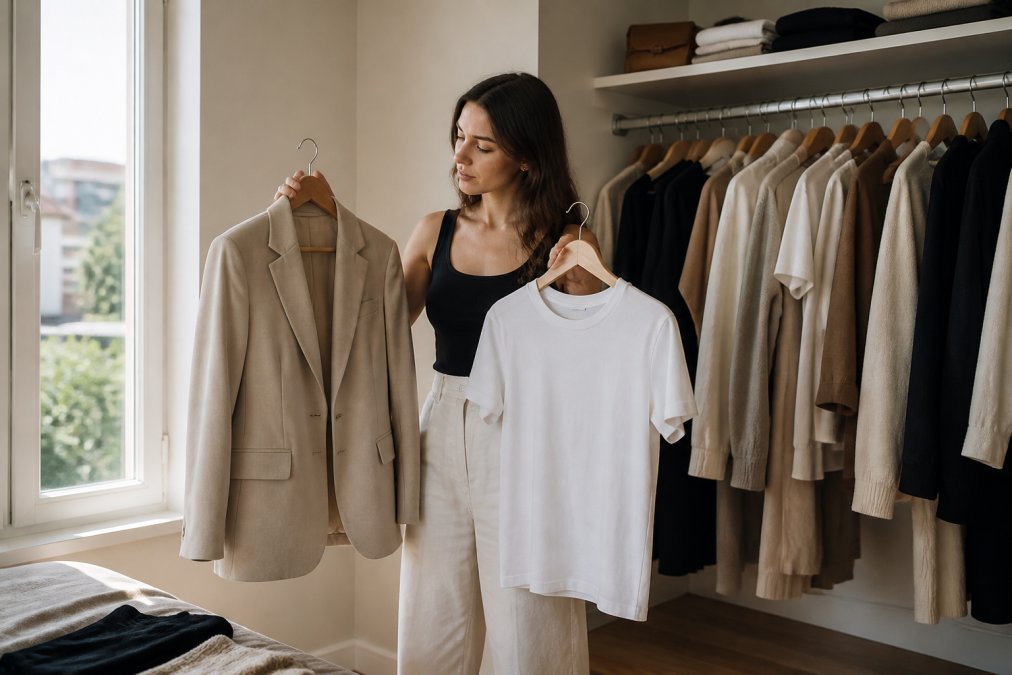
A neutral blazer is non-negotiable. It elevates basics instantly and works across casual and professional contexts. The fit matters enormously: shoulders at your shoulder point, length at mid-hip, buttons closing without pulling.
Elevated Basics and Layering
A quality white button-down shirt works dressed up or down, layered or worn alone. Look for good structure and natural fiber content, tailored through the waist.
Layering pieces extend your wardrobe's functionality across seasons. A lightweight linen shirt works over basics in summer and under sweaters in transitional seasons. A fitted turtleneck layers under everything in winter. These pieces work because they're slim enough to layer without bulk but substantial enough to wear alone.
Include quality basics in your accent colors: a jewel-toned sweater, a colored button-down, or a knit in one of your signature hues. These pieces break up neutral monotony while still coordinating with your foundation.
Your Modern Wardrobe Checklist
Moving beyond basics, your wardrobe needs pieces that create actual outfits.
Essential Tops and Layering Pieces
- White and black t-shirts (quality cotton or cotton-blend)
- Cream and gray t-shirts
- White button-down shirt
- Lightweight linen or cotton shirt
- Crew neck sweater (cream or gray)
- V-neck sweater (camel or your neutral)
- Cardigan (cream, camel, or gray)
- Turtleneck or mock neck (black or navy)
- Long-sleeve fitted shirt (white or your accent color)
- Tank top or camisole (neutral)
Bottoms That Work Together
- Dark-wash jeans (well-fitting, quality denim)
- Black trousers (tailored)
- Navy or gray trousers
- Cream or camel trousers
- Neutral-colored leggings or ponte pants
- Midi skirt (neutral or your accent color)
Outerwear and Transitional Pieces
- Structured blazer (navy, charcoal, or camel)
- Casual jacket (denim or utility style)
- Lightweight cardigan for layering
- Trench coat or longer jacket (neutral)
- Sweater dress (neutral or accent color)
This checklist represents roughly 20-25 pieces. When chosen correctly, these pieces create dozens of outfit combinations because every piece works with multiple others.
Quality, Fit, and Longevity: What Actually Matters
Most people focus on price rather than value. A $40 piece that falls apart after six months is far more expensive than a $120 piece that lasts five years.
Evaluate High-Quality Construction
Quality shows in details. Seams should be straight, secure, and finished, not raw-edged. Run your hand along a seam inside the garment; if threads are loose or stitching looks uneven, the piece won't hold up.
Check fabric weight and fiber content. Natural fibers like cotton, linen, wool, and silk generally hold up better than synthetics and breathe more effectively (peer-reviewed research). A quality cotton shirt feels substantial, not thin (the FTC). A wool sweater should have a tight weave. Blended fabrics often perform better than 100% of either fiber.
Look at hems and edges for hand-finished details. Check closures: buttons should be sewn securely with matching thread, zippers should move smoothly. Feel the fabric, quality pieces feel good to touch, smooth and substantial, not scratchy.
The Cost-Per-Wear Calculation
Cost-per-wear is the most honest way to evaluate affordability. Divide the price by the number of times you'll wear it.
A $150 blazer worn 150 times over three years costs $1 per wear (the FTC). A $50 shirt worn five times costs $10 per wear. The blazer is actually the bargain. For wardrobe basics, aim for pieces you'll wear at least 50-75 times. For accent pieces, 20-30 wears is reasonable.
Tailoring and Fit Adjustments
Perfect fit matters more than perfect size. A piece that fits your body perfectly will be worn infinitely more than one that's technically the right size but doesn't fit right.
Budget for tailoring on key pieces. Common adjustments include hemming pants and skirts, taking in side seams, adjusting shoulders, shortening sleeves, and taking in waistbands. These typically cost $15-50 per piece. It's an investment that pays back immediately in how much you wear the piece.
Mix and Match: Building Outfits from Your Pieces
The entire point of a timeless modern wardrobe is that pieces work together.
The 70/30 Rule: Staples and Statement Pieces
The 70/30 rule suggests that 70% of your wardrobe should be neutral staples and 30% should be statement pieces or accent colors. This ratio ensures a solid foundation while maintaining visual interest and personality.
Your 70% consists of neutral basics: white, black, gray, navy, cream, camel, and brown in various pieces. Your 30% brings personality: accent colors, patterns, and pieces with more visual interest. A burgundy sweater, patterned blouse, textured jacket, or colored trousers. These pieces make outfits feel intentional and reflect your personal style.
Outfit Formulas That Work
Rather than staring at your closet wondering what to wear, use formulas.
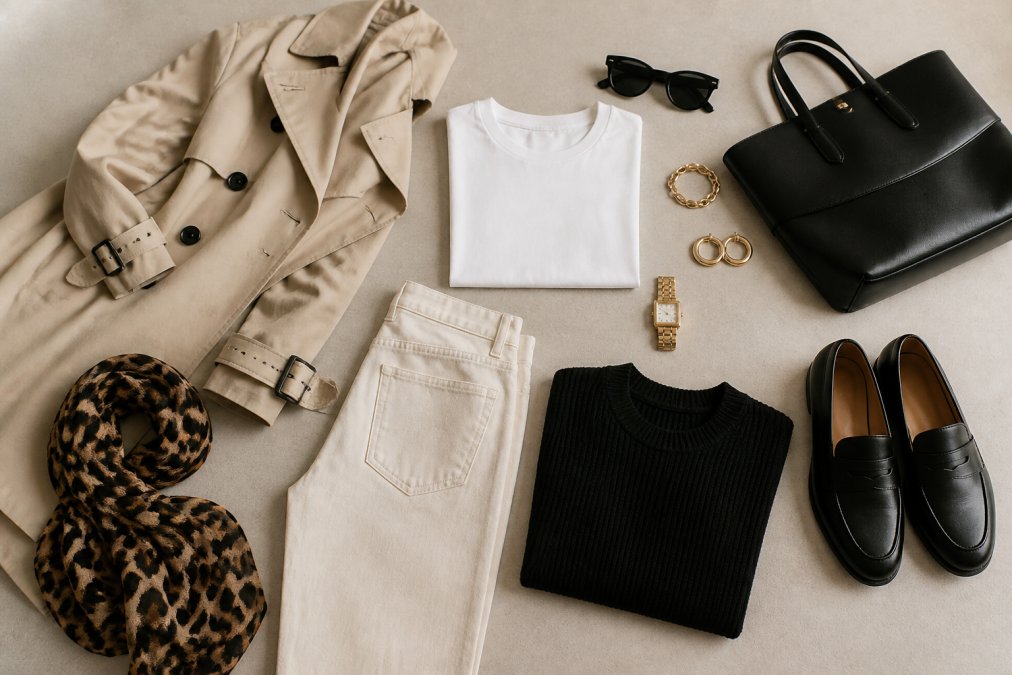
The Classic Neutral: Neutral bottom + neutral top + neutral outerwear. A gray trouser, white shirt, and camel blazer. These outfits are foolproof and endlessly wearable.
The Neutral + Accent: Neutral bottom + accent-color top + neutral outerwear. Navy trousers, burgundy sweater, camel blazer. The accent color adds interest while neutrals keep it cohesive.
The Layered Look: Neutral bottom + neutral base layer + contrasting layer + outerwear. Black jeans, white tee, gray sweater, navy blazer. Layering adds visual depth and extends functionality across seasons.
The Dressed-Down Blazer: Dark jeans + white or neutral tee + blazer. Swap the jeans for trousers to dress it up.
The Monochromatic Moment: Multiple pieces in the same color family. Gray trousers, gray sweater, charcoal blazer. Monochromatic dressing is sophisticated and surprisingly easy.
Write these formulas down or save them somewhere accessible. When tired or in a rush, formulas eliminate decision fatigue.
Maintain Your Wardrobe for Lasting Style
Quality pieces deserve proper care. How you maintain your wardrobe directly impacts how long pieces last.
Fabric Care and Garment Longevity
Read care labels and follow them. This preserves your investment. Understand your fabrics: cotton and linen can generally handle machine washing in cool water. Wool needs gentle washing or dry-cleaning. Silk and delicate fabrics usually need hand washing or dry-cleaning.
Wash less frequently than you think. Most items can be worn multiple times before washing. Jeans especially benefit from infrequent washing. Spot-clean stains rather than washing entire garments. Air out pieces between wears.
When you do wash, turn items inside out. Use cold water to prevent fading and shrinkage. Use gentle detergent designed for quality fabrics. Air dry delicate items to preserve fabric integrity.
Store properly. Fold heavy knits rather than hanging them. Hang structured pieces like blazers and button-downs. Use quality hangers that won't leave marks. Store seasonal items in clean containers away from direct sunlight and moisture.
Storage and Seasonal Rotation
Organize your closet by category and color. This makes it easy to see what you have and identify gaps. When everything is visible, you wear more of what you own.
Rotate seasonally if you have limited space. Pack away heavy winter coats in summer and vice versa. Use the same hangers throughout your closet for a cohesive look and to maximize space.
Keep like items together: all neutral trousers in one section, all sweaters together, all blazers in one spot. This organization makes outfit building faster and ensures you wear everything you own.
Curate Over Time: The Slow Fashion Approach
Building a timeless modern wardrobe isn't a one-time project. It's an evolving process where you add pieces intentionally over months and years.
Slow fashion means buying less, choosing better, and keeping pieces longer. Instead of shopping reactively when bored or chasing trends, you shop strategically to fill actual gaps.
Give yourself permission to build gradually. You don't need everything at once. Start with your foundation pieces, then add accent pieces and statement items over time. This approach also gives you time to understand what you actually wear versus what you think you should wear.
Before you buy anything new, ask: Does this fit my color palette? Does it work with at least three pieces I already own? Will I wear this in a year? Can I afford it without financial stress? If you can't answer yes to all of these, keep scrolling.
At ETHOS CONCEPT, we've built our collections around this philosophy of intentional curation. Our Atelier Line features limited-edition pieces designed to work as statement items within a timeless foundation. Rather than chasing seasonal trends, we focus on bold, sophisticated pieces that earn their place through quality and design longevity.
The shift from quantity to quality, from trends to timelessness, from reactive shopping to intentional curation, transforms how you feel getting dressed. A wardrobe built this way stops being a source of stress and becomes a genuine asset to your life.
Building a timeless modern wardrobe is fundamentally about knowing yourself and investing in pieces that work for your life. The challenge most people face isn't finding clothes, it's finding clothes that actually coordinate and reflect who they are. ETHOS CONCEPT addresses this by curating bold, high-quality pieces designed to work together as part of a cohesive wardrobe system. With our focus on elevated basics and limited-edition statement pieces from our Atelier Line, you can build a wardrobe that's both personally expressive and genuinely wearable. Start with your foundation, add intentionally, and maintain properly, and you'll have a wardrobe that works for you across years, not seasons.
Frequently Asked Questions
What is the 70/30 rule for building a timeless modern wardrobe?
The 70/30 rule means 70% of your wardrobe should consist of neutral, versatile staples that mix and match easily, while 30% can be bolder pieces, trends, or statement items that express your personality. This balance keeps your wardrobe functional and timeless while allowing room for individual style expression without constantly chasing trends.
How do I create a capsule wardrobe essentials foundation?
Start with 20-30 core pieces in a neutral color palette: white and black tees, a crisp button-up, well-fitting jeans, neutral trousers, a blazer, and layering basics. Add transitional pieces like cardigans and lightweight sweaters. Choose high-quality natural fibers when possible. Every piece should coordinate with at least three others, creating multiple outfit combinations from minimal items.
How can I find my personal style without following every trend?
Audit your closet to identify patterns in colors, silhouettes, and pieces you actually wear. Save inspiration photos of outfits that resonate with you, then analyze the common elements. Consider your lifestyle, body shape, and what makes you feel confident. Your personal style emerges from what you naturally gravitate toward, not what fashion magazines say you should wear.
What is cost-per-wear and why does it matter for a modern wardrobe?
Cost-per-wear divides the price of an item by how many times you'll wear it. A $150 blazer worn 100 times costs $1.50 per wear; a $40 trendy top worn twice costs $20 per wear. Investing in quality, versatile pieces with higher cost-per-wear reduces waste, saves money long-term, and builds a wardrobe that actually works for your life.
How do I balance timeless pieces with modern trends?
Build your foundation with classic silhouettes and neutral colors that won't date quickly. Add trends through accessories, limited quantities, or pieces you genuinely love rather than feel obligated to buy. Trends work best as accents in a wardrobe of timeless staples. This approach lets you stay current without constantly replacing basics.
What should I look for in high-quality clothing construction?
Examine seams for straight, tight stitching with no puckering. Check fabric weight and feel for natural fibers like cotton, linen, and wool. Look for finished hems, reinforced stress points, and quality zippers or buttons. Read fabric content labels and care instructions. High-quality pieces maintain their shape, color, and integrity through regular washing and wearing.
How often should I update my modern wardrobe checklist?
Review your wardrobe annually or when your lifestyle changes. Add pieces only when you've identified a gap you actually use. Replace worn-out items with similar versions rather than constantly adding new things. A timeless wardrobe evolves slowly through intentional curation, not frequent overhauls.
This article was written using GrandRanker