

Table of Contents
- What High Quality Stitching Actually Looks Like
- Garment Seam Types Explained
- Visual Inspection: The Five-Point Stitching Checklist
- How to Check Fabric Quality and Its Impact on Stitching
- Signs of Poor Garment Construction
- How Garment Type Changes Stitching Requirements
- Why Quality Stitching Matters for Durability and Value
- Conclusion
What High Quality Stitching Actually Looks Like
High quality stitching is the foundation of garment durability. When examining garment construction, look for straight, consistent seams with uniform stitch length, proper tension without puckering, and reinforced stress points that prevent unraveling. The difference between a garment lasting five years versus five washes comes down to these technical details.
Most shoppers focus on fabric feel or design, missing what actually determines whether a piece survives repeated wear and washing. The stitching is where the garment's promise holds or breaks. Understanding what separates quality construction from mass-market shortcuts means you can invest confidently in pieces that maintain their structure and appearance.
At ETHOS CONCEPT, we offer pieces where the stitching reflects the same care as the design. This guide walks you through exactly what to look for when evaluating garment construction.
Garment Seam Types Explained
Different garments require different seam construction methods. The seam type determines how the garment performs under stress, ages, and whether stitching is visible. Understanding these distinctions helps you recognize when a manufacturer chose the right technique or cut corners.
Lockstitch vs. Chainstitch Construction
A lockstitch is the most common seam type in quality garment construction. It creates a secure lock between two threads on each pass through the fabric, producing a symmetrical stitch visible on both sides. Lockstitch seams are durable, reversible, and resistant to unraveling if a single thread breaks. Quality garments typically use 12 to 16 stitches per inch, creating a strong bond without excessive thread bulk (peer-reviewed research).
A chainstitch uses a single thread looped through itself to create the seam. It's faster to produce and creates a distinctive raised appearance, often visible only on one side. Chainstitching is common on jeans, particularly on inseams where the stitch won't be prominent. The advantage is speed and flexibility, the seam stretches slightly more than lockstitch, ideal for denim. However, a broken thread can cause the entire seam to unravel. Quality manufacturers use chainstitch strategically where the construction method suits the fabric and wear pattern.
Overlock and Serging for Edge Finishing
An overlock (also called serging) wraps thread around raw fabric edges to prevent fraying. This finishing technique is applied after the primary seam is constructed. Quality garments use overlocking on internal seams, armholes, and necklines where raw edges would otherwise deteriorate through washing.
A three-thread overlock is standard and functional. A four-thread overlock adds extra durability and is commonly found on premium garments. Thread tension on overlocked edges should be even and consistent, with no loops or loose areas. Quality garments show smooth, finished overlocked seams inside, not hastily applied work.
Visual Inspection: The Five-Point Stitching Checklist
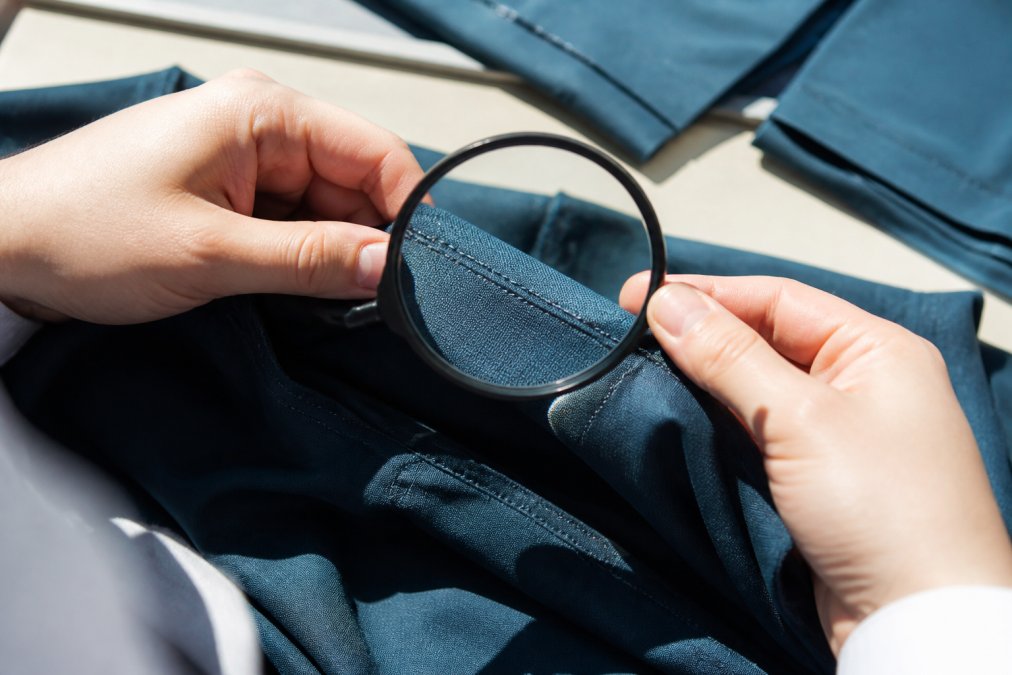
Evaluating high quality stitching requires a systematic approach. This five-point checklist gives you a framework for rapid assessment without specialized tools.
1. Seam Straightness and Consistency
Run your eye along the full length of a seam. A quality seam follows a perfectly straight line from end to end with no wavering. The thread should track parallel to the fabric grain. Inconsistent seams that drift or vary in distance from the fabric edge indicate poor machine calibration or rushed production.
Check multiple seams on the same garment. If side seams are straight but inseams are crooked, this suggests inconsistent quality control. Topstitching should be equally straight and parallel to the primary seam. Curved seams like armholes should follow smoothly without flat spots or sudden angle changes.
2. Stitch Density and Length Uniformity
Examine stitch length, the distance between individual needle penetrations. Quality garments maintain consistent stitch length throughout the seam. Lightweight silks typically use 12-14 stitches per inch, while denim uses 10-12 stitches per inch (peer-reviewed research). What matters is consistency within that range.
Run your finger along the seam from inside the garment. You should feel uniform texture with no sudden changes. Uneven stitch density creates weak points where stress concentrates. Quality manufacturers maintain stitch density so precisely that individual variations aren't visually detectable.
3. Thread Fraying and Raw Edges
Inspect thread ends where the seam begins and ends. Quality seams use backstitching to anchor thread ends securely. The thread should not unravel when you tug gently, and raw thread ends should be trimmed flush with the fabric.
Look at raw fabric edges inside the garment. Quality garments either have overlocked edges or enclose raw edges within the garment structure. Mass-market garments often leave raw edges unfinished, causing fraying through washing and wear.
4. Buttonhole and Bar Tack Reinforcement
Buttonholes are stress points requiring reinforcement. A quality buttonhole has dense, even stitching that completely surrounds the opening, preventing fabric from tearing around the button.
Bar tacks are reinforcement stitches applied at stress points like pocket corners and zipper bases. A quality bar tack is a small rectangle of dense stitching (typically 3-5mm long) that locks the seam securely (peer-reviewed research). Stitches should appear almost solid. Weak bar tacks show visible gaps or are applied only partially.
5. Inside-Out Inspection for Hidden Quality
Turn the garment inside out. Quality garments show the same attention to detail inside as outside. Seams should be finished with no visible loose threads or raw edges dangling.
Check the hem. Quality hems use multiple rows of stitching or a blind stitch nearly invisible from the outside. The hemline should be perfectly straight and sit at consistent distance from the fabric edge.
Look at how seams are pressed. Quality garments have seams that lie flat and stay flat, indicating professional finishing. Seams that puff up suggest inadequate pressing or poor construction.
How to Check Fabric Quality and Its Impact on Stitching
The fabric itself influences how well stitching performs. Delicate fabrics require different stitch density and thread choices than sturdy ones.
Thread Material and Diameter Matter
The thread must be compatible with fabric weight and fiber content. Silk thread is used on silk garments for matching sheen and drape. Polyester thread is standard on most garments for durability and cost-effectiveness. Cotton thread appears on natural-fiber garments for a matte finish.
Thread diameter affects both aesthetics and durability. Thicker thread creates visible stitching and stronger seams but can bulk delicate fabrics. Fine thread on heavy fabrics may break under stress. Quality manufacturers match thread diameter to fabric weight so precisely that stitching won't be noticed unless intentionally decorative.
Run your finger over the thread on a seam. Fine thread should feel smooth and integrated into the fabric. Coarse thread on delicate fabric creates a bumpy texture and indicates poor material matching.
Fabric Puckering and Seam Allowance Issues
Puckering occurs when stitching tension is too tight for the fabric, causing bunching or wrinkling along the seam. Quality garments show no puckering; fabric lies flat on both sides of the seam.
The seam allowance (fabric between the stitch line and edge) typically ranges from 0.5 to 1 inch on quality garments. Consistent seam allowance width indicates precision cutting and construction. Varying widths create uneven stress distribution and premature seam failure.
Press the seam from inside the garment. A quality seam lies completely flat with no ridges or waves. If puckering reappears after pressing, tension during construction was incorrect.
Signs of Poor Garment Construction
Recognizing common construction failures helps you avoid garments that deteriorate quickly.
Common Stitch Failures and What They Mean
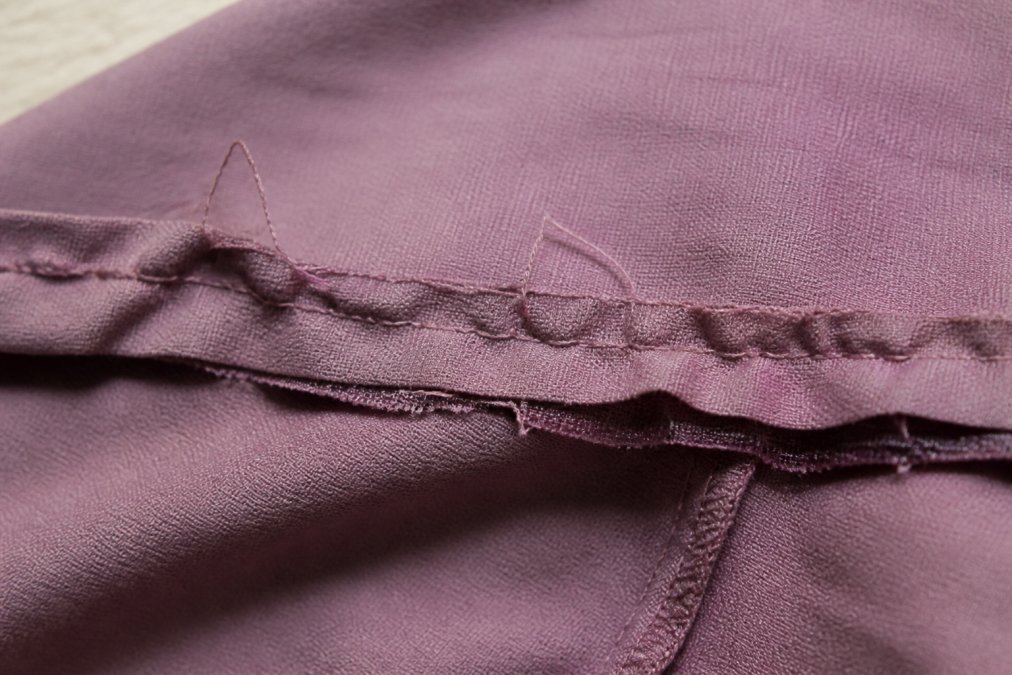
Skipped stitches appear as gaps in the seam where the needle failed to penetrate fabric. These create weak points that eventually tear under stress. One or two skipped stitches might be acceptable, but multiple indicate poor quality control.
Thread breakage during construction leaves visible knots or repairs in the seam. Quality manufacturers remove and restart the seam; mass-market producers sometimes leave repairs visible. These are weak points.
Unraveling seams happen when thread tension is too loose, creating loops that catch during wear. The seam appears visually loose, and you can pull thread easily.
Puckering indicates thread was too tight for the fabric, and the seam will continue puckering through washing and wear.
Tension Problems and Stress Point Weaknesses
Improper tension creates loose seams (thread too loose) or puckered seams (thread too tight). Both compromise durability. Stress points like armholes, crotch seams, and pocket corners require reinforcement stitching or heavier thread. Examine these areas closely. Quality garments show dense bar tacks or multiple rows of stitching at stress points.
Check the crotch seam on pants by gently pulling legs in opposite directions. The seam should not stretch or shift. Similarly, check armholes by pulling sleeve and body in opposite directions. Movement indicates inadequate reinforcement.
How Garment Type Changes Stitching Requirements
Different garments experience different stresses and require different stitching approaches.
Jeans and workwear use heavy-duty stitching with multiple rows of topstitching and chainstitch on inseams. Stitch density is lower (10-12 stitches per inch) because thicker thread and denim require more space. Bar tacks at stress points are essential.
Structured garments like blazers use lockstitch throughout with careful seam allowance consistency. Stitching is often hidden inside, so quality manufacturers invest in precision even though it won't be visible.
Stretchy fabrics like jersey require special techniques. Thread must stretch with the fabric, so manufacturers use elastic thread or stretch-compatible polyester. Stitch density is typically lower (14-16 stitches per inch) to allow fabric movement.
Lightweight fabrics like silk require fine thread and high stitch density (14-16 stitches per inch) to prevent seam slippage. Tension must be perfectly calibrated.
Knit garments often use cover stitch, creating a flat, flexible seam that moves with the fabric, different from woven garment construction.
Why Quality Stitching Matters for Durability and Value
The seams determine how long a garment survives repeated wearing and washing. Poor stitching fails within months. Quality stitching keeps a garment wearable for years, directly affecting cost-per-wear calculations.
A garment with quality stitching maintains structure through dozens of wash cycles. Seams don't separate, hems don't come loose, and stress points don't fail. A piece lasting five years can offer significant value over time. A piece failing after six months offers less value.
Quality stitching also preserves fit. Garments with poor seam construction gradually lose shape as seams stretch or shift. Quality seams maintain the intended silhouette through the garment's lifetime, particularly important for fitted pieces where design depends on precise construction.
The investment in quality stitching reflects a manufacturer's confidence in the garment. Dense bar tacks, overlocked edges, and perfectly straight seams indicate a brand expecting the piece to last. At ETHOS CONCEPT, we prioritize construction that justifies design investment and rewards wearers with longevity.
Understanding how to identify high quality stitching transforms how you evaluate pieces before purchasing. The five-point checklist, seam straightness, stitch density, thread fraying, reinforcement, and inside inspection, provides a practical framework for rapid assessment. When you recognize that quality stitching determines garment durability and long-term value, you can make confident purchasing decisions. At ETHOS CONCEPT, our Atelier Line and core collections feature lockstitch seams with consistent density, reinforced stress points with dense bar tacks, and overlocked edges throughout. This commitment to construction quality means your investment in bold, sophisticated pieces pays dividends through years of wear.
Frequently Asked Questions
Q: What does high quality stitching look like on a garment?
A: High quality stitching appears straight, even, and consistent throughout the seam. Stitches are uniform in length and spacing, with no visible puckering or loose threads. The seam lies flat against the fabric, and thread tension is balanced so neither side shows loops or bunching. Reinforced stress points like buttonholes and armholes feature bar tacks or multiple passes of stitching. Inside seams are finished cleanly, with raw edges either serged or hemmed to prevent fraying.
Q: How can you tell if a seam is durable?
A: Durable seams feature proper stitch density (typically 12-16 stitches per inch for woven fabrics), appropriate seam allowance, and reinforcement at stress points. Check for lockstitch construction, which creates interlocking loops that resist unraveling. Examine the inside of the garment to confirm seams aren't cut too close to the stitching line. High quality thread diameter and material also contribute to durability. Test the seam gently by pulling; it should feel secure without threads separating.
Q: Why do loose threads indicate poor garment construction?
A: Loose threads signal inadequate finishing techniques and weak garment integrity. They suggest raw edges weren't properly serged or hemmed, which allows fabric to fray and seams to unravel over time. Loose threads also indicate inconsistent tension during stitching, meaning the seam may not hold under stress. Additionally, loose threads often mean the garment was rushed through production without quality control inspection. This typically correlates with other construction shortcuts, including insufficient stitch density and inadequate reinforcement at stress points.
Q: What is the difference between single and double stitching?
A: Single stitching uses one line of thread to join fabric pieces, while double stitching uses two parallel lines for added strength and durability. Double stitching (topstitching combined with in-seam stitching) is common on stress points like armholes, waistbands, and seams that endure frequent movement or tension. Single stitching is acceptable for less-stressed areas like decorative seams or lightweight fabrics. High quality garments strategically use double stitching where durability matters most, while avoiding excessive stitching that can create bulk or restrict fabric movement.
This article was written using GrandRanker