

Table of Contents
- What Makes a Versatile Capsule Wardrobe Work
- Step 1: Define Your Personal Color Palette and Silhouette
- Step 2: Edit and Declutter Your Current Wardrobe
- Capsule Wardrobe Essentials List: Core Pieces for Every Season
- The 3-3-3 Rule for Building Your Capsule Wardrobe
- How to Style Sophisticated Casual Wear for Any Occasion
- Investment Pieces vs. Fast Fashion: Building for Longevity
- Common Capsule Wardrobe Mistakes to Avoid
Last Updated: August 19, 2026
What Makes a Versatile Capsule Wardrobe Work
A versatile capsule wardrobe is a curated collection of essential clothing pieces that work together harmoniously, allowing you to create multiple outfits from fewer items. The goal is strategic simplicity that maximizes outfit combinations while minimizing decision fatigue and closet clutter.
The foundation rests on three pillars: intentional color selection, timeless silhouettes, and quality basics that transcend seasonal trends. When these elements align, you can mix and match pieces effortlessly, building sophisticated casual wear for any occasion. According to research on consumer wardrobe habits, the average person wears only 20% of their closet regularly; a capsule wardrobe flips that ratio by ensuring nearly every piece earns its place.
The real power emerges over time. As you wear pieces repeatedly, you discover unexpected combinations. A neutral blazer becomes the bridge between casual weekend wear and professional workday looks. A simple white button-down transitions from summer layering piece to winter base layer. This is where the cost-per-wear calculation becomes meaningful: investing in fewer, higher-quality pieces often costs less over time than constantly replacing worn-out fast fashion.
Pro Tip
Start by tracking what you actually wear for two weeks. Don't change your habits, just observe. The patterns you'll notice reveal which pieces genuinely work for your life.
Step 1: Define Your Personal Color Palette and Silhouette
Before buying or editing anything, establish the visual framework that will guide every decision. Your personal color palette determines which hues harmonize with your skin tone, hair, and eyes, while your signature silhouette identifies the cuts and proportions that flatter your body type.
Choose 3-4 neutral foundation colors that will serve as the backbone of your wardrobe. These aren't necessarily black, white, and gray, they're the neutrals that make you look healthy and awake. Drape fabric swatches near your face in natural light and notice which colors make your complexion appear brighter. Some people glow in warm tones like camel, cream, and olive; others shine in cool tones like navy, charcoal, and white.
Once neutrals are locked in, select 2-3 accent colors that complement your palette and reflect your personality. These might be jewel tones like emerald or sapphire, warm hues like rust or terracotta, or softer shades like blush or sage. Choose colors you genuinely love wearing, not colors that are trendy.
For silhouette, identify the cuts that consistently make you feel good. Do straight-leg jeans or tailored trousers feel more like you than skinny fits? Do oversized blazers or fitted jackets suit your frame better? This isn't about following rules; it's about recognizing patterns in what actually works for your body.

Key Takeaway
Your color palette and silhouette are the non-negotiable filters for every purchase decision. Everything else flows from these two choices.
Step 2: Edit and Declutter Your Current Wardrobe
Before adding anything new, conduct an honest audit of what you already own. This reveals which pieces are actually wearable and which can be rehomed to make space for intentional additions.
Pull everything from your closet and lay it out by category: tops, bottoms, outerwear, dresses, and accessories. As you handle each piece, ask three questions: Do I wear this? Do I feel good in this? Does this fit my color palette and silhouette?
Items that don't pass this test go into a donation pile. This includes pieces that are damaged beyond reasonable repair, items that haven't fit for more than a year, and clothes that no longer align with your life. Common culprits include aspirational sizes, trend pieces worn once, and gifts accepted out of obligation. If you haven't worn something in the past year, it's unlikely to be worn in the next year.
Once you've decluttered, organize what remains by color within each category. This visual arrangement immediately shows you what's missing. You might discover you have five white tops but no neutral layering pieces, or three pairs of black pants but nothing in your accent colors. These gaps inform your capsule wardrobe building strategy.
Watch Out
The biggest decluttering mistake is keeping pieces "just in case" or because you spent money on them. If an item doesn't serve your current life, it's taking up real estate from pieces that will.
Capsule Wardrobe Essentials List: Core Pieces for Every Season
Neutral Foundation Pieces
Your neutral foundation comprises the pieces that form the backbone of outfit combinations. These items should work across all seasons and pair with virtually everything in your color palette.
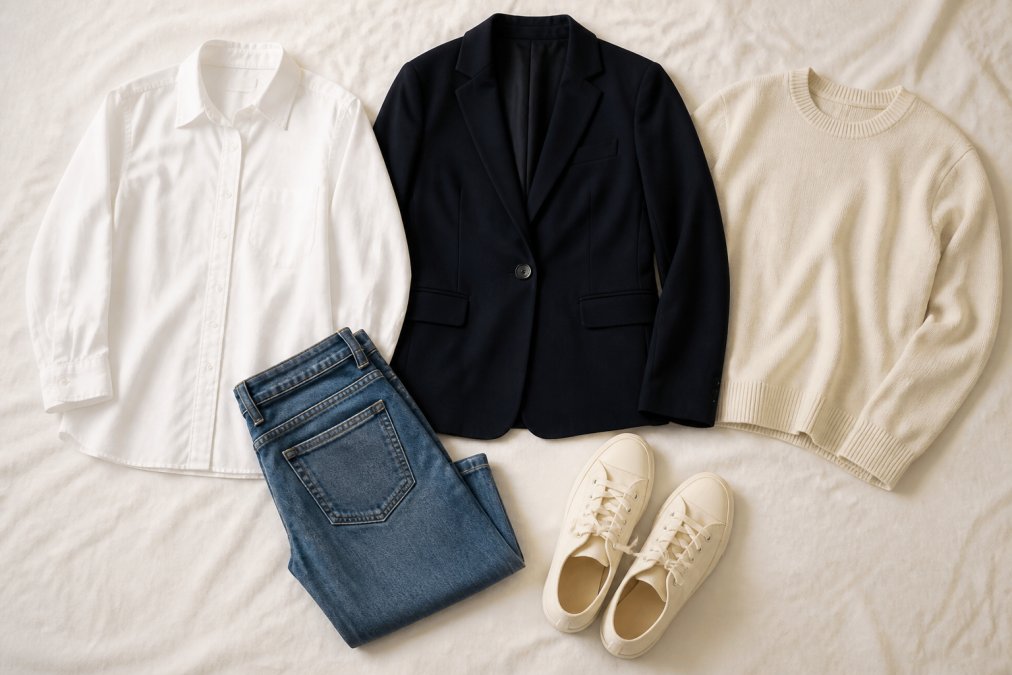
Start with bottoms. A pair of well-fitting straight-leg jeans in a medium or dark wash is non-negotiable. Straight-leg cuts offer the most versatility across body types and style eras. Add tailored trousers in a neutral tone and a neutral skirt, whether A-line, pencil, or midi.
For tops, invest in quality basics. A white button-down shirt is essential; it layers under everything and dresses up or down depending on styling. Add a neutral sweater in a weight appropriate to your climate and a simple t-shirt in a neutral tone.
Outerwear matters significantly. A tailored blazer in a neutral tone becomes the secret weapon for elevating casual outfits instantly. A classic trench coat or neutral cardigan adds layering options without bulk.
Layering and Transition Pieces
These pieces solve the seasonal transition problem. Layering pieces allow you to wear the same core items across seasons by adjusting what goes underneath or on top.
A lightweight sweater or long-sleeve fitted top works as a base layer in winter and as a standalone top in spring and fall. A denim jacket or lightweight blazer extends the wearability of sleeveless dresses. A cardigan layers over dresses, provides warmth without formality, and works year-round.
Scarves function as both style elements and practical layering tools. Invest in one quality scarf rather than multiple cheap ones. A lightweight belt defines waistlines and adds proportion to loose-fitting pieces. Simple jewelry in your preferred metal works across seasons.
| Essential Category | Specific Pieces | Purpose |
|---|---|---|
| Bottoms | Straight-leg jeans, tailored trousers, neutral skirt | Foundation for mixing and matching |
| Tops | White button-down, neutral sweater, fitted t-shirt | Layering base and standalone wear |
| Outerwear | Tailored blazer, trench coat or cardigan | Season extension and elevation |
| Layering | Long-sleeve fitted top, denim jacket, scarf | Seasonal transitions and depth |
| Footwear | White sneakers, neutral flats, versatile heels | Day-to-night and seasonal variety |
The 3-3-3 Rule for Building Your Capsule Wardrobe
The 3-3-3 rule provides a simple framework for strategic purchasing decisions: for every category of clothing, own three pieces in neutral tones and three in your accent colors.
For example, with sweaters, you might own three neutral options (cream, camel, charcoal) and three in accent colors (emerald, rust, navy). This ensures you always have clean pieces available while maintaining visual cohesion. The rule prevents both under-purchasing and over-purchasing.
Apply the 3-3-3 rule to major categories: sweaters, button-downs, pants, skirts, and blazers. For smaller categories like outerwear, adjust to 2-2-2. Before buying, ask: "Does this fit my 3-3-3 allocation? Is it filling a gap or duplicating something I already own?"
Pro Tip
Track your 3-3-3 inventory on your phone. A simple note listing what you own in each category prevents duplicate purchases and identifies genuine gaps.
How to Style Sophisticated Casual Wear for Any Occasion
Day-to-Night Outfit Combinations
The mark of a truly versatile capsule wardrobe is the ability to transform a daytime look into something appropriate for evening with minimal changes.
Start with your foundation: straight-leg jeans or tailored trousers. For daytime, pair them with a simple t-shirt and a cardigan or denim jacket. Add white sneakers or neutral flats and minimal jewelry.
For evening, swap the t-shirt for a fitted sweater or white button-down shirt. Replace the casual jacket with your tailored blazer. Switch sneakers for heels or dressier flats. Add jewelry that catches light. Suddenly, the same pants work for dinner or a professional event.
The key is owning pieces that work in both contexts. A white button-down is perfect for daytime layering but also dresses up instantly for evening. A tailored blazer works with jeans during the day and with dressier pieces at night.
Seasonal Transitions and Layering Strategy
Many people struggle with seasonal transitions because they think they need completely different wardrobes. A well-planned capsule wardrobe solves this through strategic layering.
In summer, wear your lightest pieces solo: sleeveless dresses, short-sleeve tops, linen pants. In fall, add layering pieces: long-sleeve fitted tops under sleeveless dresses, cardigans over simple tees. In winter, add heavier outerwear. In spring, reverse the process.
The pieces themselves don't change, only how you combine them. A sleeveless dress worn alone in July becomes a layered look with a long-sleeve shirt underneath in October. Your straight-leg jeans work with sandals in summer and boots in winter.
Investment Pieces vs. Fast Fashion: Building for Longevity
The answer isn't to reject all fast fashion or spend a fortune on designer items. It's about strategic allocation.
Invest in pieces you'll wear constantly and that form the foundation of your wardrobe. Your tailored blazer, quality jeans, and neutral sweaters should be the best quality you can afford. These pieces take the most wear, and their condition directly impacts how many outfits they enable.
Fast fashion works for pieces you'll wear less frequently or that serve a specific seasonal purpose. That accent-color sweater you love but only wear in fall? Fast fashion is fine. A trend piece you want to try without committing? Acceptable.
Consider cost-per-wear when making investment decisions. A $200 blazer worn 100 times costs $2 per wear. A $50 blazer worn 10 times costs $5 per wear. The expensive piece is actually cheaper over time. Quality pieces last longer, reducing environmental impact and the total number of purchases needed.
At ETHOS CONCEPT, we understand that building a versatile capsule wardrobe doesn't mean sacrificing style for basics. Our Atelier Line features limited-edition pieces that serve as investment items, bold, thoughtfully designed pieces that anchor your wardrobe while expressing your individuality. These pieces combine quality craftsmanship with accessible pricing, making sophisticated style genuinely attainable.
Common Capsule Wardrobe Mistakes to Avoid
The most common mistake is buying pieces without considering how they'll work with existing items. Before any purchase, visualize at least three outfit combinations using pieces you already own.
Another frequent error is choosing silhouettes based on trends rather than what actually flatters your body. Stick with silhouettes that have consistently made you feel confident.
Many people underestimate the importance of fit. A piece that's the right color and style but doesn't fit properly will sit unworn. Tailoring is worth the investment for pieces you'll wear frequently.
Neglecting your personal style identity is another pitfall. A capsule wardrobe should reflect who you actually are, not who you think you should be. If you're naturally drawn to bold colors and statement pieces, forcing yourself into a minimal neutral wardrobe will fail.
Finally, don't ignore the power of accessories. Quality shoes, a few key bags, and simple jewelry multiply your outfit combinations without adding bulk to your closet. According to fashion industry research on wardrobe satisfaction, people who intentionally curate their wardrobes report significantly higher satisfaction with their clothing choices and spend less time deciding what to wear.
Building a versatile capsule wardrobe takes time and honest self-assessment, but the payoff is a closet that actually works for your life. You'll spend less time deciding what to wear, less money replacing worn-out pieces, and more time feeling confident in your style. Start with your color palette and silhouette, edit ruthlessly, and invest in pieces that earn their place through repeated wear. ETHOS CONCEPT's curated selection of bold streetstyle and versatile essentials makes it easy to find pieces that work together, quality items that express your individuality without requiring constant purchases. Explore ETHOS CONCEPT's Atelier Line for investment pieces and start building a wardrobe that actually serves you.
Frequently Asked Questions
What is the 3-3-3 rule for capsule wardrobes?
The 3-3-3 rule is a simple framework for building a versatile capsule wardrobe: 3 neutral base colors (typically black, white, and gray or beige), 3 secondary colors that complement your skin tone, and 3 accent colors for personality. This structure ensures every piece coordinates, maximizing outfit combinations while keeping your wardrobe focused and functional. The rule works because neutrals form the foundation, secondary colors add depth, and accents prevent monotony.
What are the essential pieces for a capsule wardrobe?
Core essentials include a white button-down shirt, tailored blazer, straight-leg jeans, neutral sweaters, basic t-shirts, and a simple white sneaker. Add layering pieces like cardigans and structured jackets, plus a few investment pieces in your chosen silhouette. Include neutral-toned trousers and a simple dress that works day-to-night. These items form the foundation of outfit combinations and transition seamlessly between seasons when styled thoughtfully.
How do I transition a capsule wardrobe between seasons?
Focus on layering pieces that work year-round: lightweight cardigans, structured blazers, and denim jackets bridge spring and fall. Swap heavy knits for thinner sweaters, and rotate footwear without replacing core pieces. Keep neutral tones consistent across seasons so existing pieces layer with new seasonal additions. Store off-season items carefully and rotate them back in with intentional styling. This approach maximizes cost-per-wear and reduces the need to rebuild your wardrobe each season.
What are the most common capsule wardrobe mistakes?
Common mistakes include ignoring your body type and silhouette, buying too many trendy pieces instead of timeless basics, and neglecting proper fit and proportion. Many people skip the wardrobe edit step, keeping pieces that don't coordinate. Others fail to define a color palette, resulting in pieces that clash. Avoid buying items that don't work with your lifestyle or existing pieces. Quality matters more than quantity, one well-made blazer outperforms five poorly constructed trendy items.
Should I focus on investment pieces or build gradually with affordable options?
A balanced approach works best: invest in foundational pieces you'll wear hundreds of times (quality jeans, blazers, neutral sweaters) while using affordable options for trend-forward accents and seasonal items. Calculate cost-per-wear for each piece, a $150 blazer worn 100 times costs $1.50 per wear, while a $30 trendy top worn twice costs $15 per wear. Prioritize fit, fabric quality, and timelessness for investment pieces, and use budget-friendly options to test colors and silhouettes before committing.
How do I know what color palette will work for me?
Start by assessing your natural coloring: skin undertone (warm, cool, or neutral), hair color, and eye color. Warm undertones typically suit earth tones and warm neutrals like camel and cream. Cool undertones work with jewel tones and cool neutrals like gray and navy. Neutral undertones can wear both. Try holding fabrics near your face to see which colors make your complexion look vibrant versus dull. Once you identify your palette, build your capsule using those colors as anchors, this ensures every piece coordinates effortlessly.
Can I build a capsule wardrobe on a budget?
Yes. Start with affordable basics in your core neutral colors, then gradually add investment pieces as budget allows. Prioritize fit and fabric quality over brand names, a well-fitting $40 shirt in the right color outperforms a poorly fitting $150 piece. Shop secondhand for investment pieces like blazers and quality denim. Focus on versatile items that create multiple outfit combinations before adding new pieces. Track cost-per-wear to ensure each purchase adds value. Building slowly with intention costs less than frequent, impulsive shopping.
What's the difference between a capsule wardrobe and a minimalist wardrobe?
A capsule wardrobe prioritizes versatility and coordination, pieces work together to create many outfit combinations within a defined color palette and style identity. A minimalist wardrobe emphasizes owning fewer items overall, often with stricter limits on quantity. Both use timeless pieces and avoid excess, but a capsule can include more items if they're all functional and coordinated. A capsule wardrobe is about smart curation and maximum versatility, while minimalism focuses on reduction. You can practice both simultaneously by choosing only versatile, essential items.
This article was written using GrandRanker