

Table of Contents
- What Makes Italian Leather Bags Worth the Investment
- Vegetable Tanning vs. Chrome Tanning: Understanding the Difference
- How to Spot Fake Italian Leather and Verify Authenticity
-
Top Italian Leather Bag Brands Reviewed
- 1. Cuyana Classic Easy Tote: Sustainable Everyday Luxury
- 2. The Bridge Lucrezia: Timeless Tuscan Craftsmanship
- 3. Campomaggi Large Tote: Rugged Full-Grain Character
- 4. Officine Creative Nolita: Artisanal Woven Design
- 5. Coccinelle Beat: Quality Meets Affordability
- 6. Il Bisonte Storia: Florentine Heritage and Sustainability
- 7. Valextra Iside: Minimalist Milan Excellence
- Why Slow Fashion Is Better for Your Budget
- Leather Bag Maintenance Tips for Long-Term Durability
- Understanding Patina: How Italian Leather Ages Beautifully
- Conclusion: Finding Your Perfect Italian Leather Bag
- Frequently Asked Questions
Last Updated: September 1, 2026
What Makes Italian Leather Bags Worth the Investment
A quality Italian leather bag improves with age, develops character, and costs less per year of use than disposable alternatives. Italian leather's reputation stems from superior tanning processes, craftsmanship standards, and material selection in regions like Tuscany, creating bags that last decades.
At ETHOS CONCEPT, we offer a curated selection of bold streetstyle and affordable fashion designed for the confident woman. Our collections empower you to express your unique individuality through stylish pieces that blend elegance with modern trends. From our exclusive Atelier Line to our versatile essentials, we provide high-quality fashion that makes sophisticated style accessible to everyone. The bags reviewed here share one trait: they're built to last, whether through vegetable-tanned leather that deepens beautifully or full-grain construction prioritizing durability.
Vegetable Tanning vs. Chrome Tanning: Understanding the Difference
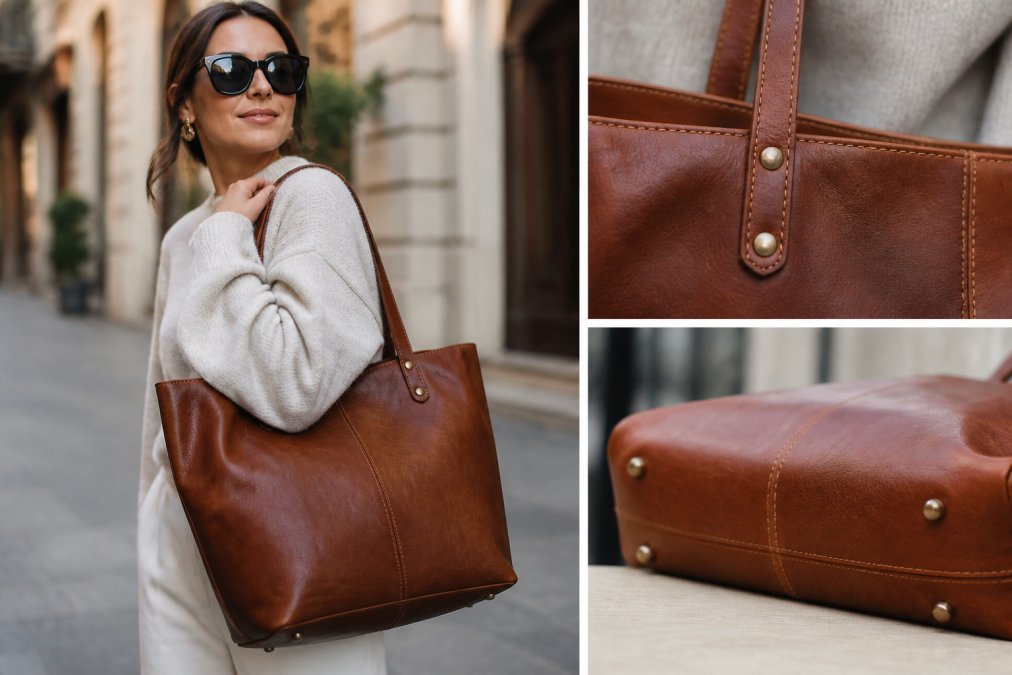
The tanning process determines how leather ages, feels, and performs. Vegetable tanning uses natural tannins from tree bark and takes weeks to complete. The leather emerges stiff but becomes supple with use, developing a unique patina that darkens and softens over time. It's more expensive but ages into something genuinely beautiful.
Chrome tanning uses chromium salts and finishes in hours. The leather is immediately soft, resists water better, and requires less maintenance. It's cheaper to produce but doesn't develop the same character.
For Italian leather bags, vegetable tanning is the traditional premium approach. Brands like The Bridge and Il Bisonte build their philosophy around it. Coccinelle uses chrome-tanned pebbled leather that's incredibly durable and practical. The real question is what you want: genuine transformation over decades, or practical durability without visible aging.
How to Spot Fake Italian Leather and Verify Authenticity
"Italian leather" often means leather merely tanned or finished in Italy, even if the hide came elsewhere. Real Italian leather bags start with quality hides and involve genuine Italian craftsmanship throughout production.
Check the origin claim. "Made in Italy" and "Italian leather" are different. Authentic Italian leather bags are made in Italy, cutting, stitching, and assembly happen there.
Examine the stitching. Hand-stitched leather shows variation proving a person made it. Machine stitching is perfectly uniform. Italian artisanal bags typically feature hand-stitching or combined hand and machine work.
Feel the leather. Genuine leather has weight and substance, feels supple but structured. Fake leather feels thin, plasticky, or overly stiff. Real leather has texture and slight imperfections.
Check the hardware. Quality Italian bags use solid brass, stainless steel, or other durable metals. Hardware should feel substantial with no plating peeling.
Verify certifications. Some Italian leather brands carry certifications from the Leather Working Group, which audits tanneries for environmental and quality standards. Il Bisonte and Cuyana highlight their sustainability certifications.
Buy from authorized retailers. Counterfeit Italian leather bags are common on secondary markets. Purchase directly from the brand or authorized retailers. ETHOS CONCEPT offers a curated selection of authentic pieces, removing guesswork from finding genuine Italian leather bags.
Top Italian Leather Bag Brands Reviewed
1. Cuyana Classic Easy Tote: Sustainable Everyday Luxury
The Cuyana Classic Easy Tote is built for quality without pretense. It's a lightweight tote in soft Italian pebbled leather, unlined to keep costs and weight minimal. The pebbled texture hides scratches better than smooth leather, making it practical for everyday use.
The two-strap design allows hand or shoulder carrying. A hidden zipper closure adds security without disrupting the clean aesthetic. Cuyana emphasizes sustainable design, the bag is LWG certified, meaning the leather comes from a tannery meeting rigorous environmental standards.
Best for: Anyone prioritizing sustainability and versatility.
Pros: LWG certified leather, lightweight and practical, soft pebbled leather develops subtle patina, hidden zipper closure, two carrying options
Cons: Unlined interior requires an insert for organization, pebbled leather lacks prestige of smooth full-grain, soft leather won't hold structured shape
2. The Bridge Lucrezia: Timeless Tuscan Craftsmanship
The Bridge represents old-world Italian leather mastery. The Lucrezia is a classic shoulder bag in full-grain, vegetable-tanned leather that deepens in color and develops character with use. Hand-selected leather, precise stitching, and refined construction methods create a bag designed to be worn, repaired, and passed down.
Best for: People viewing a bag as an heirloom investment.
Pros: Full-grain vegetable-tanned leather that ages beautifully, handcrafted with traditional Tuscan methods, develops unique patina, timeless design, exceptional quality
Cons: Higher price reflects premium materials and labor, requires more care, develops character through marks and scratches, initial stiffness takes time to break in
3. Campomaggi Large Tote: Rugged Full-Grain Character
Campomaggi embraces imperfection. The Large Tote is made from thick, full-grain Italian cowhide deliberately distressed to look vintage from day one. The vegetable-tanned leather is chunky and substantial, built for people who use bags hard. Every mark and crease is part of the design.
Best for: People wanting authenticity without minding a rugged aesthetic.
Pros: Thick, full-grain leather built for heavy daily use, vegetable-tanned and ages beautifully, intentional distressing means imperfections blend in, spacious and practical, unique vintage aesthetic
Cons: Heavy due to thick leather, distressed aesthetic isn't for everyone, requires conditioning and care, high price despite rugged appearance
4. Officine Creative Nolita: Artisanal Woven Design
Officine Creative represents the pinnacle of Italian artisanal leather craftsmanship. The Nolita features a handwoven silhouette in high-quality calf and buffalo leather with a sculptural handle. Every element is handmade. The leather is lined in soft suede. The double-zip closure provides security and functionality.
Best for: Collectors viewing bags as wearable art.
Pros: Handmade in Italy with exceptional attention to detail, unique woven design and sculptural handle, high-quality calf and buffalo leather, suede lining and double-zip closure, represents peak artisanal Italian craftsmanship
Cons: Very high price reflects labor-intensive production, specific woven design is distinctive, requires careful maintenance and storage
5. Coccinelle Beat: Quality Meets Affordability
Coccinelle proves quality Italian leather doesn't require luxury pricing. The Beat is a crossbody bag in genuine Italian pebbled leather, designed for everyday functionality without compromise. The pebbled leather is durable and practical, hiding scratches and requiring minimal conditioning.
Best for: People wanting authentic Italian leather quality without luxury pricing.
Pros: Genuine Italian pebbled leather at accessible pricing, lightweight and practical, durable leather hiding minor scratches, contemporary design, excellent quality-to-price ratio
Cons: Pebbled leather lacks prestige of smooth full-grain, not a heritage brand with same storytelling, contemporary design may feel dated in a decade
6. Il Bisonte Storia: Florentine Heritage and Sustainability
Il Bisonte, a Florentine institution since 1980, produces leather goods with unwavering commitment to traditional methods and sustainability. The Storia crossbody bag is made from naturally processed, vegetable-tanned leather that changes color and character over time. Every bag is handcrafted by Italian artisans in Tuscany.
Best for: People caring deeply about sustainability wanting genuine transformation over years.
Pros: Vegetable-tanned leather that ages beautifully, handcrafted by Italian artisans in Tuscany, strong commitment to sustainability and ethical production, each bag develops unique character, transparent about sourcing and environmental practices
Cons: Natural imperfections and color changes aren't for everyone, higher price due to artisanal production, requires regular conditioning and care
7. Valextra Iside: Minimalist Milan Excellence
Valextra is Milan's answer to refined simplicity. The Iside is a top-handle bag embodying architectural precision, clean lines, and minimalist design. There's no logo, just the product itself. Every detail is intentional. This is a bag for people understanding that true luxury is restraint.
Best for: Those seeking ultra-luxury with minimalist aesthetics.
Pros: Exceptional craftsmanship and materials, minimalist design transcending trends, understated elegance, timeless forms designed to last decades, made in Milan with precision manufacturing
Cons: Extremely high price point, minimalist design won't appeal to those preferring branded or ornate bags, simplicity means paying entirely for quality and craftsmanship
Why Slow Fashion Is Better for Your Budget
Quality Italian leather bags actually cost less over time than buying cheap bags repeatedly. A $50 bag lasting one year costs $50 per year. A $300 bag lasting ten years costs $30 per year (the FTC). When factoring in cost-per-wear, quality Italian leather bags become the affordable option.
Slow fashion also means less waste. Italian leather bags are designed to be repaired, conditioned, and used for decades, not disposed of. When you own one beautiful bag you use daily and love, you stop chasing the next purchase. Your wardrobe becomes intentional rather than impulsive, saving money and reducing consumption.
Leather Bag Maintenance Tips for Long-Term Durability
Simple, consistent maintenance extends your bag's life and helps it age beautifully.
Condition regularly. Apply conditioning cream or leather balm every 6-12 months depending on use (the FDA).
Protect from water. A leather protectant spray creates a barrier against moisture and stains.
Store properly. Keep your bag in a cool, dry place away from direct sunlight. Stuff with acid-free paper to maintain shape. Never store in plastic; leather needs to breathe.
Clean gently. A soft, damp cloth handles everyday dirt. For stubborn stains, use leather cleaner formulated for your leather type.
Handle hardware carefully. Metal hardware can tarnish or develop patina, often desirable.
Address damage promptly. Small scratches in vegetable-tanned leather often fade as leather ages. Deeper damage should be addressed by a professional leather repair specialist.
Rotate use. If you have multiple bags, rotating them extends their life and reduces wear on any single bag. Regular conditioning and protection take minimal time but dramatically extend your bag's lifespan. A well-maintained Italian leather bag can last 20-30 years or more (peer-reviewed research).
Understanding Patina: How Italian Leather Ages Beautifully
Patina is the transformation happening to leather over time, darkening, softening, and development of marks telling the story of use. For vegetable-tanned leather, patina is the entire point.
New vegetable-tanned leather is light and stiff. Over weeks and months of use, it darkens as oils from your hands and natural light interact with tannins. It softens as fibers break in and develops creases reflecting your life with the bag. Each crease and mark is evidence of use, making your bag uniquely yours.
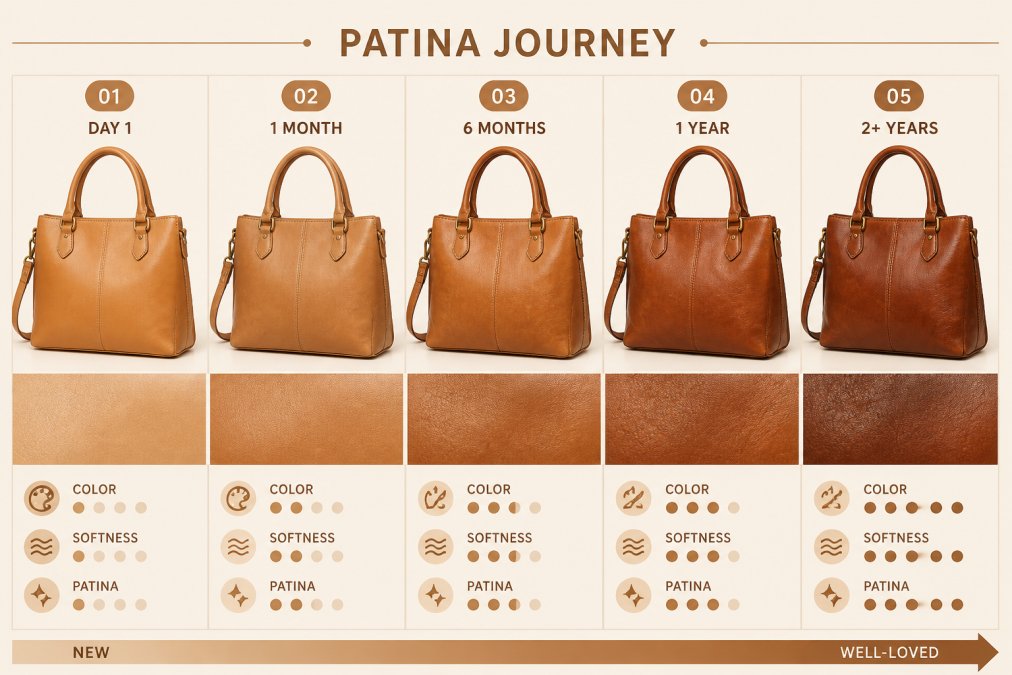
Over months and years, transformation becomes undeniable. The leather becomes richer, deeper, more textured, developing a sheen from oils and wear. This is why vegetable-tanned leather commands premium prices, you're buying a bag that improves. Chrome-tanned leather doesn't patina the same way; color remains relatively stable. Understanding patina helps you choose the right leather. If you want genuine transformation and deeper connection to your possessions, patina is the whole appeal.
Conclusion: Finding Your Perfect Italian Leather Bag
Choosing an Italian leather bag means deciding what matters most: investing in a heritage piece lasting decades, seeking sustainability and ethical production, prioritizing affordability without sacrificing quality, or looking for artisanal craftsmanship as wearable art.
Each brand represents a different answer. Cuyana delivers sustainable luxury at accessible pricing. The Bridge offers heritage and timeless design. Campomaggi celebrates rugged authenticity. Officine Creative represents artisanal mastery. Coccinelle balances quality and affordability. Il Bisonte combines craftsmanship with environmental commitment. Valextra embodies minimalist excellence.
The common thread is quality. Every bag here is built to last, uses genuine Italian leather, and represents thoughtful design. Start with your budget and lifestyle. A bag working for your life is more valuable than a prestigious name you won't use. Then consider leather type and aging process. Finally, think about the brand's philosophy, does it align with your values?
At ETHOS CONCEPT, we believe the best purchase is one you'll use for years and love more as time passes. Italian leather bags deliver exactly that. Take your time, consider the options, and choose something you'll genuinely love for years to come.
| Brand | Leather Type | Best For | Price Range | Key Feature |
|---|---|---|---|---|
| Cuyana | Italian pebbled | Sustainability-focused buyers | Mid-range | LWG certification |
| The Bridge | Vegetable-tanned full-grain | Heritage and heirloom seekers | Premium | Patina development |
| Campomaggi | Vegetable-tanned full-grain | Rugged daily use | Premium | Intentional distressing |
| Officine Creative | Calf and buffalo leather | Art collectors | Luxury | Handwoven artisanal design |
| Coccinelle | Italian pebbled | Everyday practicality | Mid-range | Quality-to-price ratio |
| Il Bisonte | Vegetable-tanned | Sustainability and craftsmanship | Premium | Florentine heritage |
| Valextra | Italian leather | Minimalist luxury seekers | Ultra-luxury | Architectural precision |
Finding the right Italian leather bag means balancing investment with practicality. The bags reviewed here represent genuine quality at different price points and philosophies. Whether you choose a sustainable option, heritage brand, or artisanal statement piece, you're making a decision serving you for years. Quality Italian leather doesn't just look good; it gets better with time. Visit ETHOS CONCEPT for curated Italian leather selections to explore pieces matching your style and values. With free shipping on orders over $150, building a wardrobe of timeless, high-quality pieces becomes accessible.
Frequently Asked Questions
Q: What defines authentic Italian leather quality?
A: Authentic Italian leather bags are made from full-grain or top-grain leather that retains the hide's natural surface. Genuine Italian leather often comes from regions like Tuscany or Milan, where artisans use traditional vegetable tanning or chrome tanning methods. Look for certifications like LWG (Leather Working Group), quality hardware, and evidence of skilled craftsmanship. The leather should feel supple and develop a unique patina over time, becoming more beautiful with age rather than deteriorating.
Q: How can you tell if an Italian leather bag is genuine?
A: Check for origin claims indicating it was made in Italy. Examine the stitching; artisanal work often shows slight variations. Feel the leather texture, genuine leather feels natural and develops character, while fake leather can feel plastic-like. Inspect hardware quality; Italian brands typically use durable metal hardware. Smell the bag; real leather has a distinctive scent. Request documentation of the tanning process and verify the brand's website for authenticity markers. Be cautious of bags with overly perfect finishes or suspiciously low prices.
Q: Why is slow fashion better for your budget than fast fashion?
A: Slow fashion Italian leather bags may cost more upfront but can offer superior cost-per-wear over years of use. For example, a quality bag lasting 5-10 years can be more economical in the long run than repeatedly buying less durable, fast-fashion alternatives. Italian leather often improves with age, adding value rather than declining. Slow fashion pieces tend to remain stylish across seasons, reducing the need for constant replacement. You invest in quality once instead of repeatedly buying disposable items, ultimately saving money and reducing waste.
Q: How should you care for Italian leather bags to ensure they last?
A: Store your bag in a dust bag away from direct sunlight and heat. Condition the leather every 6-12 months with leather conditioner to maintain suppleness and water resistance. Wipe spills immediately with a soft, damp cloth. Avoid overstuffing, which stresses seams and distorts the bag's shape. Use a leather protectant spray for water and stain resistance. For scuffs, use leather cream; for deeper damage, consult a professional restorer. Keep the hardware dry to prevent tarnishing. Proper maintenance preserves the patina and extends your bag's lifespan significantly.
Q: What is the difference between full-grain and top-grain Italian leather?
A: Full-grain leather retains the hide's complete surface, including natural marks and imperfections, making it the highest quality. It's durable, develops a rich patina, and breathes naturally. Top-grain leather has the surface layer sanded and refinished, removing imperfections but potentially reducing durability and character development. Full-grain is often preferred for investment pieces because it improves with age. Top-grain offers a more uniform appearance but may not age as beautifully. Italian artisans typically favor full-grain for heritage bags, while some contemporary brands use top-grain for a polished look.
This article was written using GrandRanker