

Table of Contents
- Why Alternatives to Fast Fashion Matter for Women Over 40
- Clothing Brands That Are Not Fast Fashion
- Affordable Sustainable Fashion That Doesn't Compromise
- Secondhand Clothing for Women Over 40
- How to Care for Clothes and Extend Wardrobe Life
- Building a Capsule Wardrobe That Works
- Cost Per Wear: The Real Economics of Quality Fashion
- Frequently Asked Questions
Last Updated: October 10, 2026
Why Alternatives to Fast Fashion Matter for Women Over 40
The average woman discards 81 pounds of clothing per year, most ending up in landfills within months. For women over 40, this cycle conflicts with what we actually want: pieces that fit well, last longer, and reflect who we've become.
Fast fashion thrives on volume and speed, constant new styles, artificially low prices, and a clear message: buy more, wear once, discard. But at 40 and beyond, many women have realized this model doesn't serve them financially, aesthetically, or otherwise.
The shift toward alternatives to fast fashion isn't just ethical, it's practical. Quality pieces cost more upfront but less over time.
Clothing Brands That Are Not Fast Fashion
Mid-Priced Brands Built for Quality
Alternatives to fast fashion occupy a specific market position: higher quality than mass retailers, but not luxury pricing.
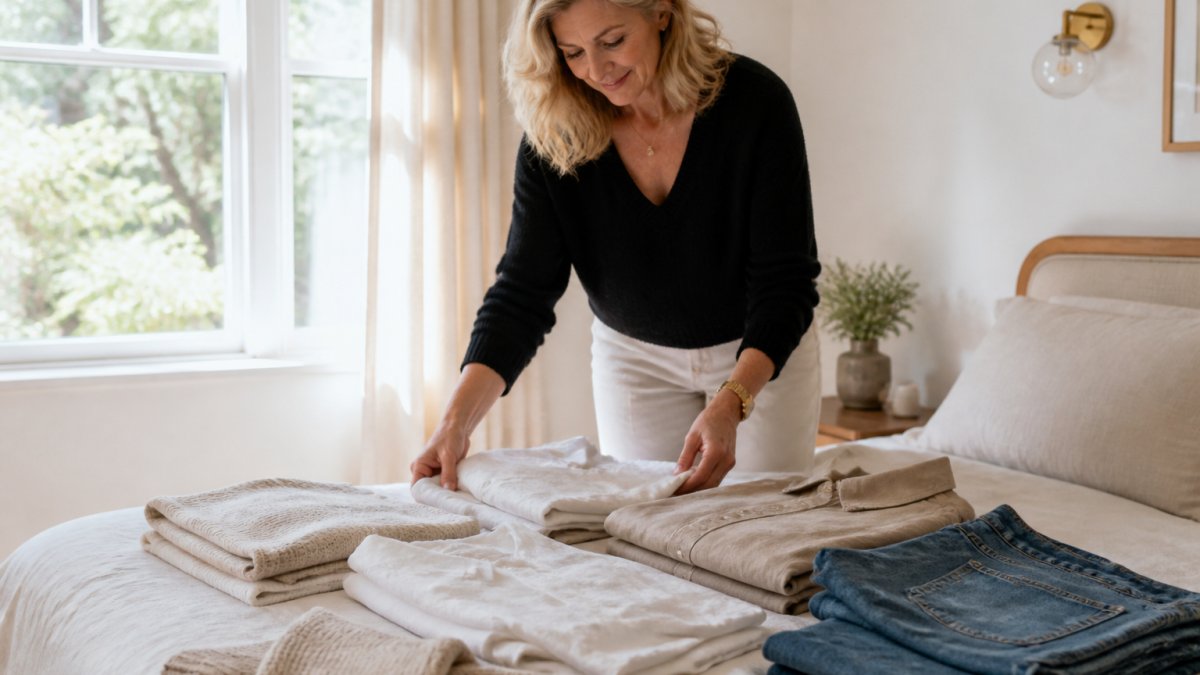
AYR (All Year Round) emphasizes construction and fit over trend cycles. For women over 40, this means clothing that doesn't require constant alterations to look intentional.
Sézane balances European design with accessible pricing, favoring timeless silhouettes over seasonal trends.
Frank & Eileen builds its reputation on quality basics and investment pieces through fewer collections per year and emphasis on durability.
Massimo Dutti and Faithfull The Brand understand that midlife bodies and tastes differ from younger shoppers, reflecting this in sizing and design.
Accessible Slow-Fashion Basics
Pact specializes in everyday basics at accessible prices, offering an affordable entry point for moving away from fast fashion. A well-made white t-shirt or neutral sweater becomes your wardrobe foundation.
Everlane explicitly markets itself as a non-fast-fashion alternative, showing production costs and markups so shoppers understand where their money goes.
Reformation combines style and sustainability messaging with sizing that accommodates a range of body types.
Affordable Sustainable Fashion That Doesn't Compromise
Sustainable fashion carries a premium reputation, but the real cost equation differs. A $150 piece worn 75 times costs $2 per wear; a $50 fast-fashion item worn 8 times costs $6.25 per wear. For women over 40, alternatives to fast fashion become financially rational when calculating total cost of ownership.
Price Tiers and What to Expect
Budget-conscious entry ($30-$80 per piece): Brands like Pact and Everlane offer sustainable materials and transparent production without luxury markup. These work well for basics, t-shirts, sweaters, everyday pants, where durability matters most.
Mid-range investment ($80-$200 per piece): Sézane, AYR, and Frank & Eileen capture the "sweet spot" for most women over 40: quality construction, thoughtful design, and durability that justifies the price.
Premium slow-fashion ($200+): Luxury slow-fashion brands reflect artisanal production, rare materials, or limited runs. For most wardrobes, this tier is optional, a single investment piece rather than foundation.
Evaluating Durability Before You Buy
Sustainability claims mean nothing if a piece falls apart in a year. Verify durability through specific markers:
Fabric weight and composition: Quality cotton t-shirts weigh at least 5.5 ounces per square yard; lighter weights pill and stretch. Linen should feel substantial. Wool blends (80% wool, 20% nylon) last longer than 100% wool. Avoid polyester blends marketed as "sustainable", they pill, retain odors, and don't biodegrade.
Seam construction: Flat-felled seams (visible on both sides, reinforced) outlast single-stitched seams. French seams (enclosed) resist fraying. Check that high-stress areas like armholes use durable construction.
Hems and edges: Sewn hems stay intact through dozens of washes. Raw edges on basics signal cost-cutting.
Hardware: Metal zippers outlast plastic. Real buttons (wood, bone, metal) won't crack like resin. Buttons sewn with thread shanks (small space between button and fabric) prevent stress on thread.
Spotting Greenwashing Versus Real Commitment
Every brand now claims sustainability. Here's how to distinguish real commitment from marketing:
Specificity is the first filter. "Ethically made" without detail is marketing. "GOTS-certified organic cotton" or "Fair Trade Certified production in Vietnam" is verifiable. Look for certifications (GOTS, Fair Trade, B Corp, OEKO-TEX) that third parties audit.
Check the scope. Sustainable packaging doesn't make sustainable fashion. Real commitment shows across materials sourcing, production location, labor practices, durability design, and end-of-life options.
Evaluate the durability claim. A fast-fashion piece made from organic cotton is still disposable. A brand's sustainability story should include how long pieces are designed to last.
Look for transparency on labor. Ethical production is verifiable. Brands should name production facilities and labor certifications.
Assess the price-to-sustainability ratio. Sustainable production costs more. If a brand hasn't raised prices, either the sustainability is superficial or labor practices are questionable.
The Cost-Per-Wear Calculation in Practice
A $140 linen shirt from a slow-fashion brand worn 120 times over 5 years costs $1.17 per wear. A $35 fast-fashion linen shirt worn 15 times before pilling costs $2.33 per wear. The sustainable option costs less over time, even with higher upfront price. This is the actual economics of alternatives to fast fashion.
Secondhand Clothing for Women Over 40
Secondhand shopping is the most sustainable option, it requires no new production, resources, or labor. It also offers access to higher-quality pieces at lower prices. For women over 40, secondhand shopping provides access to well-made basics and investment pieces from brands that no longer exist or have moved upmarket.
Success requires knowing exactly what you're looking for and understanding how to evaluate fit, quality, and versatility.
Understanding Sizing Across Eras and Brands
Vintage and secondhand pieces fit dramatically differently than modern sizing.
Vintage sizing (1980s-1990s) runs small. A 1990s size 8 typically fits like a modern size 4-6. This varies by brand and decade.
European brands size differently than American brands. Italian brands tend to run small and tight. Scandinavian brands run true to size or slightly large. French brands vary widely.
Modern secondhand (2010s-present) is closer to current sizing, but inconsistency remains.
The solution: measure, don't guess. Know your actual measurements in inches: bust, waist, hip, sleeve length, and inseam.
Fit and Comfort Considerations for Midlife Bodies
Waist placement matters more. Many women over 40 prefer higher waistbands for comfort and proportion. Check the rise measurement (from crotch to waistband).
Sleeve length and shoulder fit become critical. Ill-fitting sleeves are harder to alter. Shoulder seams should sit at your actual shoulder bone.
Fabric weight and drape affect how pieces sit. Lightweight, clingy fabrics show every contour. Heavier fabrics with structure drape better and feel more intentional.
Length proportions shift with age. A midi skirt hitting just below the knee is more flattering for most body types than one hitting mid-calf. Check the length measurement against pieces you wear confidently.
Strategic Secondhand Shopping by Wardrobe Need
For basics: Look for natural fibers (100% cotton, linen, wool), check for pilling or fading, and inspect seams carefully.
For investment pieces: Fit is critical. A blazer that doesn't fit your shoulders won't work. Request detailed measurements. Look for natural fibers and quality construction (silk linings, bound seams, real buttons).
For statement pieces: Secondhand is ideal because you wear these less frequently. Look for natural fibers and interesting construction from the 1970s-1990s.
For occasion wear: Secondhand is cost-effective because you wear occasion pieces rarely. A $200 vintage silk dress worn 5 times costs $40 per wear.
Evaluating Quality in Secondhand Pieces
Seams: Look for straight, intact seams. A seam coming apart is a repair cost and sign of heavy wear. Check underarm and side seams especially.
Zippers: Test if possible. Metal zippers are more durable than plastic and more worth repairing.
Hems: A hem coming down is a quick fix. A hem that's been let out and shows a faded line is cosmetic but visible.
Fabric condition: Look for pilling (indicating breakdown), uneven fading, stains, or odors. Pilling and uneven fading are permanent.
Color and pattern: Vintage colors fade differently than modern dyes. Classics (stripes, checks, florals) remain timeless.
Where to Shop Secondhand for Quality
Consignment shops curate inventory and often specialize in quality pieces. More expensive than thrift stores but offer better quality assurance.
Online resale platforms (Vestiaire Collective, Grailed, Rebag) offer vast selection and global access. Read reviews and understand return policies.
Thrift stores offer the lowest prices and widest selection but require patience and knowledge. Visit regularly to find quality pieces before others do.
Estate sales and auctions offer access to vintage pieces, often higher quality than thrift stores. Pieces are typically from older collections (1970s-1990s).
Specialty vintage shops focus on specific eras or styles. More expensive but offer curated selection and expert knowledge.
How to Care for Clothes and Extend Wardrobe Life
Quality clothing only delivers value if you keep it wearable.
Wash less frequently. Most clothing doesn't need washing after every wear. Spot-clean stains, air out pieces between wears, and wash only when soiled.
Wash cold, dry low or hang-dry. Heat damages most fabrics. Cold water cleans effectively and reduces fading. Air drying adds years to a garment's life.
Repair small damage immediately. A loose seam becomes a split seam becomes a ruined piece. Small repairs take minutes and prevent replacements.
Store properly. Hang some fabrics; fold knits. Cedar blocks or lavender sachets deter moths without chemical smell. Proper storage prevents damage during storage.
Building a Capsule Wardrobe That Works
A capsule wardrobe solves the problem that alternatives to fast fashion create: if you're buying fewer pieces, they need to work together.
Start with neutrals: black, navy, cream, gray, and one or two earth tones. Everything else should coordinate with this base.
Add versatile basics: well-fitting jeans, neutral sweaters, white t-shirts, simple button-ups. Quality matters here most because you'll wear them constantly.
Choose a few statement pieces reflecting your personal style.
Include pieces for different occasions: work, casual, evening. Three or four pieces per context is sufficient if well-chosen.
Test the 30-wear rule: before buying, honestly assess whether you'll wear the piece at least 30 times.
| Wardrobe Element | Purpose | Quality Investment | Replacement Frequency |
|---|---|---|---|
| Neutral basics (jeans, white tee, sweater) | Foundation pieces worn constantly | High | Every 2-3 years |
| Neutral outerwear | Layering across seasons | High | Every 3-5 years |
| Statement pieces | Personal style expression | Medium | Every 2-4 years |
| Occasion wear | Work, events, evening | Medium | Every 3-5 years |
| Accessories | Extend outfit combinations | Low to medium | As needed |
Cost Per Wear: The Real Economics of Quality Fashion
A $200 piece worn 100 times costs $2 per wear. A $40 piece worn 10 times costs $4 per wear.
Calculate cost per wear for pieces you already own.
Quality clothing has lower cost per wear because you wear it more often and for longer. It fits better, so you reach for it.
This math is why alternatives to fast fashion actually save money. The upfront cost is higher, but total cost of ownership is lower.
Building a wardrobe that reflects who you actually are takes time and intention.
Frequently Asked Questions
What are the best alternatives to fast fashion for women over 40?
Brands like AYR, Sézane, Frank & Eileen, and ETHOS CONCEPT prioritize quality, fit, and timeless design over trend cycles. These alternatives to fast fashion emphasize durability, flattering cuts, and investment pieces that work for midlife bodies. Secondhand resale platforms and thrift shopping also offer quality pieces at lower price points, allowing you to build a wardrobe that reflects your personal style without supporting disposable fashion.
How can I tell whether a clothing brand is sustainable?
Look for transparent supply chain information, material certifications (organic cotton, recycled fibers, fair trade), and labor practice disclosures. Avoid greenwashing by checking whether the brand specifies where and how items are made. Brands practicing affordable sustainable fashion often highlight fabric composition, production methods, and environmental commitments on their websites. If claims lack specifics, contact the brand directly before purchasing.
Is secondhand clothing a good alternative to fast fashion?
Yes. Secondhand clothing for women over 40 extends garment life, reduces waste, and often provides access to higher-quality or luxury pieces at lower cost. Thrifting, resale platforms, and clothing swaps let you find versatile, durable items that fit mature bodies well. Secondhand shopping also supports a circular economy and reduces the environmental impact of textile production.
How can I make my existing clothes last longer?
Proper care extends wardrobe life significantly. Wash in cold water, air-dry when possible, and store items correctly to prevent damage. Repair small issues immediately: mend seams, replace buttons, and patch small holes before they worsen. Invest in quality hangers and storage to prevent wrinkles and stretching. Knowing how to care for clothes means your investment pieces remain flattering and functional for years, improving your cost per wear.
What fabrics should I prioritize when building a wardrobe over 40?
Choose natural fibers like organic cotton, linen, wool, and silk for comfort, breathability, and durability. These materials age well, feel luxurious, and work across seasons. Look for high thread counts and quality construction. Recycled fibers and blends with natural bases also offer sustainability without sacrificing feel or longevity. Quality fabrics are central to affordable sustainable fashion because they withstand repeated wear and washing.