

Table of Contents
- Understanding Fabric Integrity and Garment Longevity
- How to Wash Delicate Fabrics Without Damage
- How Often to Wash Clothes to Prevent Wear-and-Tear
- Best Practices for Garment Storage and Seasonal Care
- Drying Methods and Crease Prevention
- Repairing Clothes to Extend Life and Sustainability
- Handling Stains, Odors, and Maintaining Garment Shape
- Why Maintaining High Quality Clothing Matters
- Frequently Asked Questions
Last Updated: September 21, 2026
Understanding Fabric Integrity and Garment Longevity
Your clothes are an investment. To maintain high quality clothing, understanding how fabrics break down lets you stop that breakdown before it starts.
Natural fibers like cotton, wool, and silk have different vulnerabilities than synthetics. Cotton weakens in high heat and harsh detergents. Wool pills under friction and shrinks in hot water. Silk loses sheen from improper storage. Synthetics hold color better but accumulate static and trap odors.
Damage happens in small increments, each wash, dry cycle, and fold breaks down fibers slowly. Understanding what causes breakdown lets you reverse it. The difference between a wardrobe that survives five years and one that survives fifteen comes down to intentional care practices.
Garment longevity is about washing smarter, storing to prevent moisture and insect damage, addressing stains before they set, and mending small problems before they become irreversible.
Key Takeaway
Fabric breakdown accelerates when you ignore fiber type. Learn what your garments are made of, and you've already solved half the longevity problem.
How to Wash Delicate Fabrics Without Damage
Most garment damage happens in the washing machine. Water temperature, agitation speed, and detergent chemistry either preserve or destroy fibers.
Start with the care label, it's engineering data showing what the garment can survive. Cold water wash slows fiber breakdown. Gentle cycle settings reduce agitation, critical for delicate items like silk blouses or wool sweaters.
Reading Care Labels and Water Temperature
Care labels protect against fiber breakdown in warm or hot water. Cold water slows chemical reactions that weaken natural fibers and prevents dyes from bleeding.
Temperature matters more than most people realize. Warm water opens the fiber structure, allowing detergent to penetrate deeper but also making fibers more vulnerable to stress. Hot water accelerates this process dramatically. To maintain high quality clothing, cold water wash is non-negotiable.
Inside-out washing reduces pilling and minimizes color fading from friction, especially important for darker pieces.
Gentle Cycle Settings and Detergent Selection
Gentle cycle settings reduce agitation and mechanical stress. Standard cycles use aggressive tumbling that breaks down delicate fibers over time.
Harsh detergents strip natural oils from fibers and leave residue that accelerates breakdown. Gentle detergents labeled "for delicate items" or "for fine fabrics" are pH-balanced to protect fiber structure and extend garment life.
Use half the recommended detergent amount. Excess leaves residue that dulls colors and weakens fibers.
Pro Tip
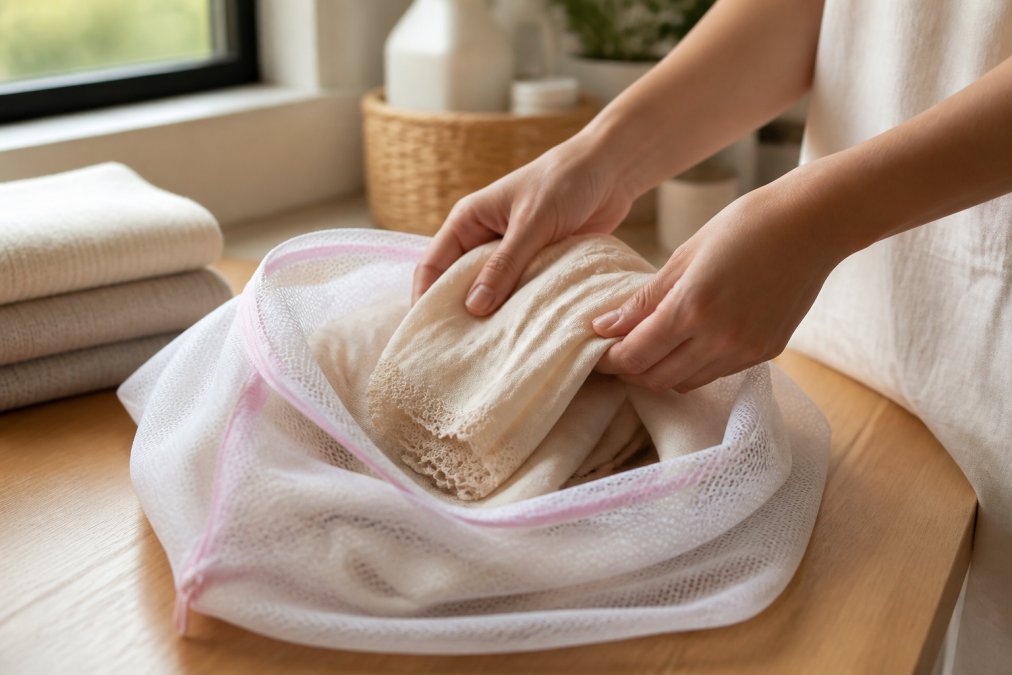
Mesh laundry bags transform how delicate items survive washing. They reduce friction between garments and the machine drum, cutting down on pilling and snagging. For silk blouses, cashmere sweaters, or anything with embellishments, a mesh bag is non-negotiable.
How Often to Wash Clothes to Prevent Wear-and-Tear
Most people wash clothes too frequently. Every cycle stresses fibers and fades colors. Washing frequency must match fabric type and wear conditions.
Fabric-Specific Washing Frequency
Cotton and cotton blends go 3-5 wears between washes for items worn close to skin and 7-10 wears for outer layers. Denim benefits from infrequent washing, many enthusiasts wash jeans only 4-6 times per year.
Wool garments should be washed only 1-2 times per season or after 10-15 wears. Wool's natural lanolin is stripped with each wash, causing pilling and shrinkage. Air out wool pieces for 24 hours between washes.
Silk and silk blends should be washed only after 4-6 wears and only when visibly soiled or odorous. Silk loses sheen with repeated washing and is vulnerable to mechanical stress.
Synthetic blends and polyester tolerate frequent washing better but trap odors and static. Wash every 2-4 wears; color fading may accelerate faster than natural fibers.
Wear Condition and Odor Assessment
Items worn close to skin (underwear, base layers, socks, undershirts) should be washed after each wear due to sweat, bacteria, and body oils.
Items worn as outer layers (blazers, cardigans, button-up shirts) can go 5-8 wears before washing.
Odor assessment is more reliable than a fixed schedule. Smell the garment before washing. Hanging in fresh air for 24 hours often eliminates odors without a full wash cycle.
Spot-Cleaning Between Full Washes
Spot-cleaning extends time between full washes and maintains garment longevity without washing entire pieces.
Blot stains with cold water and soft cloth. For protein stains, cold water alone often works. For oil stains, apply gentle detergent, wait 5 minutes, then rinse. Never use hot water; heat sets stains permanently.
For odors without stains, spray with equal parts white vinegar and water. The vinegar smell dissipates as it dries, taking odors with it.
Watch Out
Washing dark colors too frequently causes permanent fading. New dark garments bleed dye for the first 3-5 washes. Wash them separately in cold water, and limit washing frequency to preserve color depth. Once fading starts, it's irreversible. Dark jeans, dark wool sweaters, and dark synthetic pieces should be washed less frequently than light-colored items.
Pro Tip
Keep a small spray bottle of diluted white vinegar (1:1 with water) near your closet for quick odor treatment. This single tool can extend the time between washes by 2-3 wears per garment, dramatically reducing overall laundry frequency and extending garment life.
Best Practices for Garment Storage and Seasonal Care
How you store clothes determines whether they survive the off-season in good condition or emerge wrinkled, faded, and potentially damaged.
Storage environment matters most. Moisture-free, dry storage prevents mildew and fabric deterioration. Avoid damp basements or attics with temperature fluctuations.
Moisture-Free Storage and Insect Prevention
Keep storage areas dry using silica gel packets or cedar blocks to absorb humidity. Cedar also repels insects naturally.
Prevent insect damage by storing seasonal pieces in sealed containers or garment bags. Cedar blocks or lavender sachets provide natural prevention.
Organizing by Fabric Type and Seasonal Rotation
Organize by fabric type to simplify care and prevent damage from incompatible storage methods.
Seasonal rotation reduces wear stress. Store off-season pieces in breathable garment bags, not plastic. Use padded hangers for heavy pieces; wire hangers create creases.
Fold delicate knits to preserve structure. Hang heavier pieces like coats and blazers to avoid permanent creases.
Drying Methods and Crease Prevention
Air dry is the gold standard. The dryer damages fibers, fades colors, and shrinks fabrics. Air drying extends garment life dramatically.
Hang items to air dry away from direct sunlight. For delicate items, lay flat to prevent stretching.
Remove items from the washer promptly and hang while damp. Smooth wrinkles by hand as they dry to eliminate creases without heat.
When ironing, use low heat and a pressing cloth.
Repairing Clothes to Extend Life and Sustainability
Small repairs prevent irreversible damage. A loose seam hand-stitched in five minutes prevents total seam failure. Learning basic repair skills is one of the highest-impact ways to extend garment longevity.
Hand-Stitching Seams and Hems
Seams fail at stress points like underarms and sleeve attachments. Catching loose seams early prevents unraveling.
Darning and Patching Holes
Holes in knits and woven fabrics can be repaired rather than discarded. The repair method depends on fabric type and hole location.
Managing Pilling and Surface Damage
Pilling occurs when short fibers tangle together. It's common on lower-quality knits and high-friction areas like underarms and where bags rub.
Building a Basic Mending Kit
Essential items: Needles (sizes 7, 8, 10), thread in neutral colors and colors matching your garments, scissors, fabric comb or pill remover, pins, and a thimble.
Pro Tip
Start with one simple repair: restitching a loose seam on a garment you wear regularly. This single skill, practiced once, becomes automatic and will extend the life of dozens of pieces over time. Most people discover that hand-stitching is faster and more satisfying than they expected.
Key Takeaway
Repair is the most underutilized tool in garment longevity. A $20 mending kit and 30 minutes of learning basic stitches can add 2-5 years to the life of a quality garment, making repair one of the highest-return investments in wardrobe sustainability.
Handling Stains, Odors, and Maintaining Garment Shape
Stains set permanently when exposed to heat. This is the most important rule for stain removal. Cold water is your first response to any stain. Blot, don't rub. Rubbing pushes the stain deeper into fibers.
Why Maintaining High Quality Clothing Matters
Maintaining high quality clothing for longevity is an act of intentionality. It's a rejection of disposable fashion in favor of pieces that age well and serve you for years. It's also practical economics, quality pieces cost more upfront but cost less per wear when they last.
Frequently Asked Questions
How often should you actually wash your high-quality garments?
Most high-quality pieces don't need washing after every wear. Outer layers like blazers and dresses can go 3-5 wears between washes, while undergarments and basics need more frequent washing. Check care labels for specific guidance, and consider air airing between washes to reduce frequency. Washing less preserves fabric integrity and extends garment longevity significantly.
What's the best way to maintain high quality clothing during storage?
Store garments in a cool, dry, moisture-free environment away from direct sunlight to prevent fading and mildew. Use padded hangers for delicate items to maintain garment shape, and fold heavier pieces to avoid stretching. For seasonal storage, ensure pieces are completely clean and dry before packing, and consider vacuum-sealed bags for long-term storage to protect against insect damage.
How can I repair clothes to extend their life instead of replacing them?
Address small issues immediately: mend loose seams, replace missing buttons, and fix small tears before they worsen. For pilling on natural fibers or synthetic blends, use a fabric shaver carefully. Learning basic hand-sewing repairs extends garment life significantly and supports sustainable fashion practices. Professional tailoring for structural issues also preserves investment pieces.
What detergent should I use for delicate fabrics?
Use gentle, pH-balanced detergents specifically formulated for delicate items to prevent detergent residue buildup and fiber breakdown. Cold water washing with minimal detergent reduces damage to natural fibers and synthetic blends. Avoid bleach and fabric softeners, which can weaken fibers. Always follow care label instructions for best results on your specific garments.
Your investment in quality clothing deserves investment in care. Start with one simple practice, reading care labels and washing in cold water. Add proper storage next. Mend small problems before they become big ones. These practices compound over time, extending the life of every piece you own. Build your wardrobe with ETHOS CONCEPT pieces designed for longevity, then protect that investment with the care practices outlined here. Your future self will thank you for wearing clothes that last.