

Table of Contents
- What Ethical Manufacturing Actually Means in Fashion
- Fashion Supply Chain Transparency: Traceability as the First Sign
- Fair Wages and Safe Factories: The Human Element
- Sustainable Materials and Low-Impact Production Methods
- Your Ethical Fashion Certifications List: Labels That Mean Something
- How to Identify Greenwashing in Fashion Marketing
- Quality Over Quantity: Why Slow Fashion Wins
- Conclusion: Your Checklist for Spotting Ethical Manufacturing
- Frequently Asked Questions
Last Updated: September 7, 2026
What Ethical Manufacturing Actually Means in Fashion
Ethical manufacturing in fashion is the practice of producing clothing under verifiable conditions that protect worker rights, pay fair wages, and minimize environmental harm. When you shop for signs of ethical manufacturing in fashion brands, you are looking for proof that a garment's journey from fiber to finished piece did not exploit people or the planet. At ETHOS CONCEPT, we curate collections with high standards so our customers can feel confident about their bold streetstyle pieces.
The confusion starts because "ethical" and "sustainable" get used interchangeably. They are not the same thing.
Ethical vs. Sustainable: Why the Distinction Matters
Sustainability focuses on the environmental footprint: materials, water use, carbon emissions, and waste. Ethical manufacturing centers on human impact: factory conditions, wages, working hours, and labor rights. A brand can use organic cotton but still fail its workers. The reverse also happens. When evaluating a label, check both dimensions separately. A garment made from recycled polyester in an unsafe factory is not ethical, no matter how green the marketing claims appear.
Fashion Supply Chain Transparency: Traceability as the First Sign
The clearest sign of ethical manufacturing is radical transparency about the supply chain. Brands that practice supply chain transparency name their factories, publish audit results, and trace materials back to their source. If a brand cannot tell you where a garment was sewn, that silence is itself an answer.
Fashion supply chain transparency means you can follow a product's journey: which mill spun the fabric, which dye house colored it, which factory cut and sewed it. Many brands now publish supplier lists on their websites. Some go further with batch-level traceability. When a company hides these details behind vague phrases like "ethically sourced," treat that as a red flag rather than reassurance.
The Next Frontier: Digital Product Passports
The most forward-looking development in supply chain transparency is the Digital Product Passport (DPP). A DPP is a digital record attached to a garment that stores verifiable data about its entire lifecycle: raw material origin, factory locations, processing steps, certifications, and repair instructions. For the consumer, this means scanning a QR code on the care label to see a tamper-evident history of the product, not just a marketing page.
This shifts the burden of proof from the shopper to the brand. Instead of asking "Is this ethical?" you can ask "Where is the passport data?" A brand preparing for DPP compliance is already auditing its supply chain at a granular level; one that is not is likely years away from genuine traceability.
What to Demand Right Now
Until DPPs become standard, you can evaluate a brand's traceability by asking for three specific data points that are difficult to fake:
- Factory names and addresses, not just country names. A brand that says "Made in Vietnam" is stating a legal requirement. A brand that says "Produced at Hung Yen Garment Factory, Lot B4, Thang Long Industrial Park" is providing traceability.
- Batch-level material origin. Can they tell you the specific farm or region where the cotton was grown, or the specific mill that spun the yarn? If the answer is "we source from multiple suppliers," that is an admission of a fragmented, untracked supply chain.
- Third-party audit reports with corrective action plans. Publishing a summary of an audit is good. Publishing the full report, including any non-compliance findings and the timeline for fixing them, is a sign of confidence. Most brands will not do this because their audits reveal issues they have not yet resolved.
Watch Out
A brand that lists "supply chain transparency" on its website but provides no factory names, no audit reports, and no third-party verification is not being transparent. It is writing marketing copy. Demand specifics before you believe the claim.
The Traceability Tech Stack
Behind genuine traceability is a specific set of technologies becoming industry standards. Blockchain-based ledgers create an immutable record of transactions between suppliers. RFID tags allow a brand to track a batch of garments through each production stage in real time. Mass-balance certification systems, like those used by the Better Cotton Initiative, ensure the volume of certified cotton entering a mill matches the volume leaving it. When a brand references these mechanisms, not just "we use blockchain" but a specific protocol or partner, you are seeing evidence of investment in traceability, not just a claim.
Leading brands publish an annual impact report with a full supplier map, audit results by region, and progress against publicly stated traceability goals.
Fair Wages and Safe Factories: The Human Element
Fair labor practices are the heart of ethical manufacturing. This means workers earn a living wage (not just the legal minimum), factories enforce reasonable working hours, and safety standards protect everyone on the floor. Independent third-party auditing is the only way to verify these conditions actually exist.
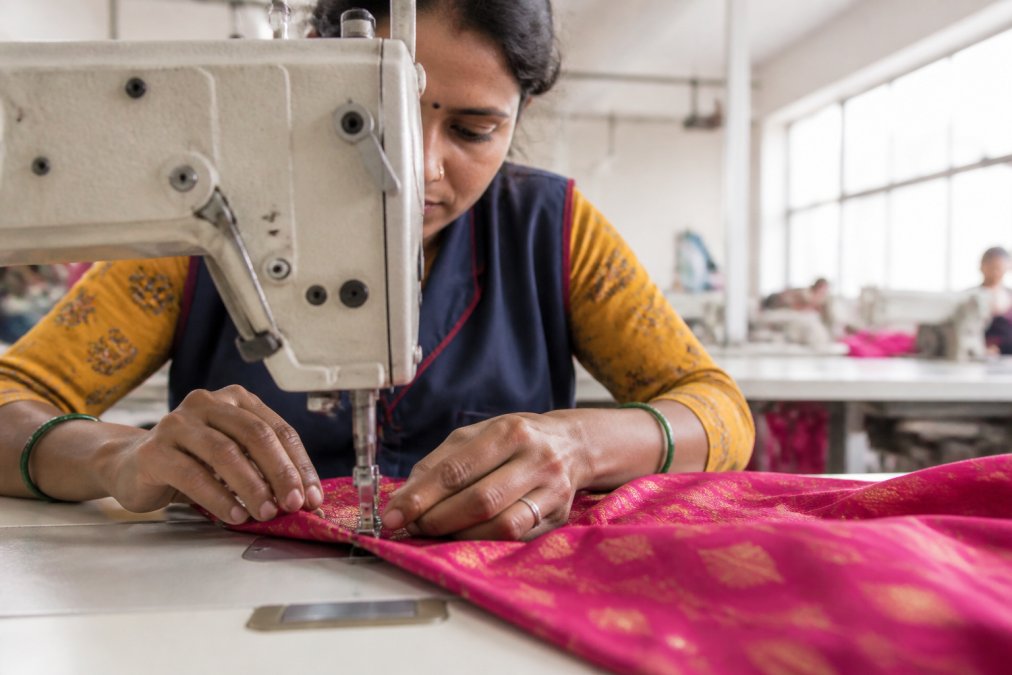
Worker safety covers everything from fire exits and ventilation to machinery guards and access to clean water. Garment worker welfare is not a luxury; it is a baseline. Auditors check payroll records against time sheets, interview workers privately, and verify that overtime is voluntary and compensated. A common mistake is trusting a brand's own "code of conduct" as proof of compliance. Codes of conduct are promises. Audits are evidence.
Sustainable Materials and Low-Impact Production Methods
Ethical manufacturing also considers what a garment is made from and how it is processed. Sustainable materials include organic textiles grown without harmful pesticides, recycled fibers, and natural fabrics that biodegrade. Low-impact dyes reduce water pollution, and resource efficiency means less waste at every stage.
Production methods matter as much as materials. A factory powered by renewable energy has a smaller carbon footprint than one running on coal. Water recycling systems in dye houses prevent toxic runoff. These choices cost money, which is why they signal genuine commitment rather than a marketing afterthought. When you see a garment made from organic cotton but cannot find information about the dye process or factory energy source, the ethical story is incomplete.
Moving Beyond the Material Name
The most common mistake shoppers make is equating a single material claim, "organic cotton" or "recycled polyester", with an ethical product. The reality is more complex.
Organic cotton is a strong starting point. It uses 91% less water than conventional cotton and eliminates synthetic pesticides. But the fiber is only part of the story, dyeing and finishing account for a significant portion of a garment's environmental impact. A GOTS-certified organic cotton garment has been processed in facilities meeting strict environmental and social criteria. An uncertified "organic cotton" garment may have been grown organically but processed in a factory with no environmental controls. The fiber is not the product; the finished garment is.
Recycled polyester diverts plastic bottles from landfills and requires less energy than virgin polyester, but every wash releases microplastics into waterways. The solution is not to avoid it entirely but to look for garments with a closed-loop design or a filter bag for washing. Some brands use CiCLO, an additive that makes polyester biodegradable in landfill conditions, though it does not solve microplastic shedding during washing.
Newer fibers enter the market with specific environmental claims. Lyocell (often sold as TENCEL) is made from sustainably harvested wood pulp in a closed-loop process that recovers 99% of the solvent. Hemp grows rapidly without irrigation and improves soil health. Piñatex, made from pineapple leaf fibers, and Mylo, made from mycelium, are emerging leather alternatives. Each has a specific production footprint, and none is universally "better", the question is whether the brand can articulate why it chose a particular fiber for a particular garment.
The Metrics That Matter
Beyond the material name, three production metrics separate genuine commitment from marketing:
- Water usage per kilogram of fabric. Conventional cotton dyeing can use up to 100 liters of water per kilogram of fabric. Leading mills using closed-loop systems reduce that to near zero. If a brand cannot tell you its water usage per unit, it has not measured it.
- Energy source at the factory level. A factory powered by on-site solar or wind has a fundamentally different footprint than one drawing from a coal-heavy grid. Look for brands that specify the energy mix of their manufacturing partners, not just their own headquarters.
- Chemical management protocols. The ZDHC (Zero Discharge of Hazardous Chemicals) program provides a framework for eliminating toxic chemicals from the supply chain. Brands that participate in ZDHC or use bluesign-certified factories are addressing the chemical load that never appears on a care label.
The Verification Gap
A material claim without a certification is a promise, not a fact. The most credible material certifications include:
- GOTS for organic textiles, which covers both environmental and social criteria across the entire processing chain.
- bluesign for responsible chemical management in textile production, which audits the entire input stream.
- Cradle to Cradle Certified for products designed for circularity, which assesses material health, recyclability, and renewable energy use.
- Global Recycled Standard (GRS) for products containing recycled materials, which also includes social and environmental criteria.
A brand that says "we use sustainable materials" without naming a certification is asking you to trust its marketing department. A brand that says "this garment is GOTS-certified, and here is our certificate number" is inviting verification. The difference is the difference between a claim and evidence.
Key Takeaway
Before buying, ask three questions: What is this garment made of? Where was it processed? And which independent body verified both answers? If the brand cannot answer all three with specifics, the ethical story is incomplete.
Your Ethical Fashion Certifications List: Labels That Mean Something
Third-party certifications are the closest thing fashion has to a verified stamp of approval. A reliable ethical fashion certifications list includes labels that audit entire supply chains, not just finished products. Look for certifications that verify both environmental and social standards through independent inspection.
| Certification | What It Verifies | What to Look For |
|---|---|---|
| Fair Trade Certified | Worker wages, community investment, safe conditions | Label on the finished garment |
| GOTS (Global Organic Textile Standard) | Organic fiber content, social criteria in processing | Certificate number to verify |
| B Corp | Overall social and environmental performance | Publicly available impact report |
| SA8000 | Social accountability, worker rights, management systems | Factory-level certification |
| OEKO-TEX | Harmful substances testing | Product-level label |
Each certification requires ongoing compliance audits, not a one-time check. The Fair Trade Certified standards and audit process demands that brands demonstrate continuous improvement in worker welfare. Similarly, the GOTS certification criteria for organic textiles covers environmental and social benchmarks across the entire textile processing chain. Before trusting any label, verify the certification number on the issuing body's database. Counterfeit and expired certifications appear more often than shoppers realize.
How to Identify Greenwashing in Fashion Marketing
Greenwashing is the practice of making misleading claims about a product's environmental or ethical credentials. It is pervasive because consumers demand responsibility, and brands know vague language sells. How to identify greenwashing in fashion starts with spotting empty vocabulary: "conscious," "responsible," "eco-friendly," and "sustainable" mean nothing without evidence.
Key Takeaway
If a brand says "sustainable" but cannot name a single material, factory, or certification, it is greenwashing. Real commitment is specific. Real commitment is verifiable. Real commitment survives scrutiny.
Specific claims are easier to verify than vague ones. "Made with organic cotton" requires certification. "We care about the planet" requires nothing. Watch for imagery of nature and greenery that has no connection to actual production methods. Question collections that launch "sustainable lines" while the rest of the catalog operates unchanged. The Federal Trade Commission Green Guides on environmental marketing claims provide legal guidance on what constitutes deceptive environmental marketing, and they are a useful benchmark for evaluating brand language.
Quality Over Quantity: Why Slow Fashion Wins
Slow fashion rejects the constant churn of trend cycles in favor of well-made pieces designed to last. A garment worn fifty times has a fraction of the environmental impact per wear of a cheap item worn twice and discarded. Quality over quantity is not just a philosophy; it is a measurable approach to reducing waste.
Circular economy thinking extends this further. Garments designed for repair, upcycling, and eventual textile recycling keep materials in use rather than sending them to landfills. When you buy fewer, better pieces, you reduce demand for the exploitative production that fast fashion depends on.
Pro Tip
Check the seam allowance on a garment before buying. A half-inch or larger seam allowance means the piece can be let out or altered, extending its life considerably. Fast fashion often uses quarter-inch allowances to save fabric, which makes tailoring impossible and shortens the garment's usable life.
Conclusion: Your Checklist for Spotting Ethical Manufacturing
Ethical manufacturing is not a single attribute but a system of verifiable practices. Before you trust a brand, confirm these signs are present: named factories and published audit results, third-party certifications you can verify independently, specific material claims backed by evidence, living wage commitments with audited payroll records, and durable construction designed for years of wear. These are the signs of ethical manufacturing in fashion brands that actually mean something.
The fashion industry's shift toward responsibility is real, but so is the marketing noise that surrounds it. When you choose pieces built on ethical foundations, you invest in garments that respect both the people who made them and the planet they were made on. At ETHOS CONCEPT, we curate collections with quality and craftsmanship that make each piece worth keeping. Build a wardrobe that expresses your individuality and your values, one well-made choice at a time.
Frequently Asked Questions
What is the difference between sustainable and ethical fashion?
Sustainable fashion focuses on the environmental impact of clothing, such as using organic textiles and reducing carbon footprints. Ethical fashion centers on the human element: fair wages, worker safety, and labor rights. A brand can be sustainable but still exploit workers, or treat people well while using resource-heavy materials. Truly responsible brands address both, which is why you should look for evidence of ethical manufacturing alongside sustainability claims.
What certifications should I look for to ensure ethical manufacturing?
Look for third-party labels that verify working conditions. Fair Trade Certified and the Fair Wear Foundation are strong indicators of audited labor practices. The Global Organic Textile Standard (GOTS) covers both organic materials and social criteria. B Corp certification signals a broader commitment to social and environmental accountability. Check the brand's website for these certifications and cross-reference them on the certifying body's site, since some brands overstate their credentials.
How can a consumer verify a brand's claims about ethical production?
Start by checking if the brand names its factories and suppliers. This is the essence of fashion supply chain transparency. Look for third-party audit results or certifications that involve unannounced factory inspections. Read the brand's annual reports on corporate social responsibility and look for specific data on wages and worker safety, not vague statements. If a brand publishes photos or videos from inside its factories, that is a positive signal. Be wary of brands that only share feel-good stories without verifiable proof.
Does ethical manufacturing always cost more?
Ethical manufacturing often costs more because it includes paying fair wages and investing in safe, clean facilities. Those costs are reflected in the retail price. However, a higher price alone does not guarantee ethical production, and some brands absorb costs to keep prices reasonable. The most reliable approach is to prioritize transparency and certifications over price signals. When you buy from a brand that verifies its supply chain, you are paying for accountability, not just a label.
Getting ethical fashion right takes effort, but the reward is a wardrobe you can feel good about in every sense. ETHOS CONCEPT brings you limited-edition pieces and versatile essentials designed for the confident woman, combining elegance with affordability so that responsible style stays accessible. Explore the Atelier Line and discover fashion that empowers your individuality without compromising your principles. Add to cart and wear your values with pride.