

Table of Contents
- What Is the 3-3-3 Rule for Clothes?
- How to Choose Your 3 Tops, 3 Bottoms, and 3 Pairs of Shoes
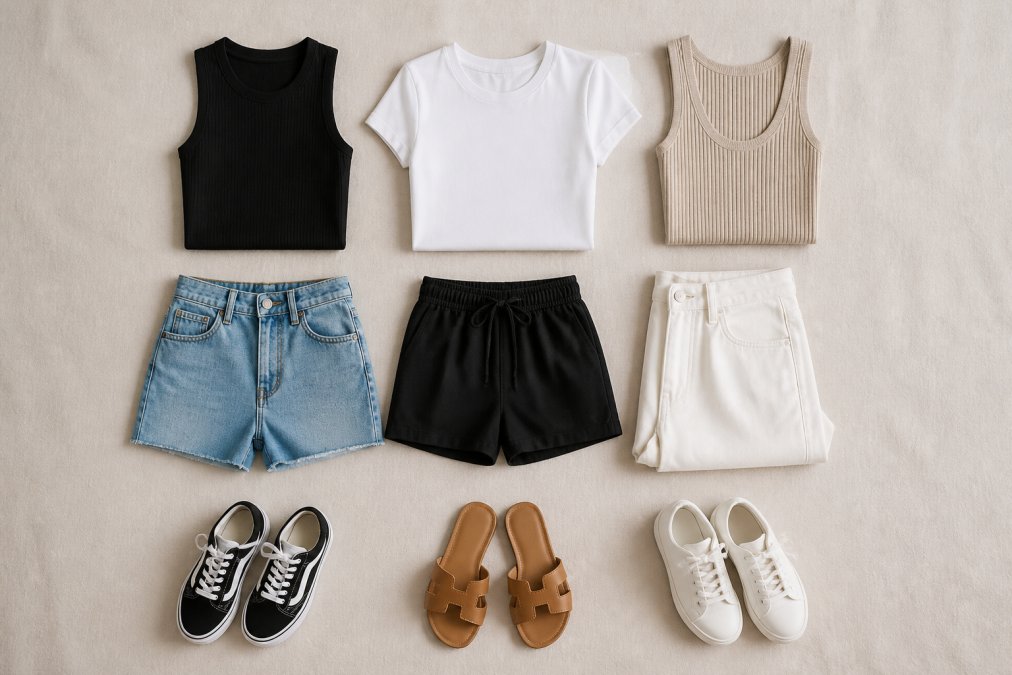
- Outfit Combinations for Beginners: 27 Looks From 9 Pieces
- Capsule Wardrobe Essentials That Make the 3-3-3 Rule Work
- The Project 333 Challenge: How It Compares and When to Try It
- Common Mistakes That Break the 3-3-3 Rule
- Conclusion
- Frequently Asked Questions
Last Updated: September 24, 2026
What Is the 3-3-3 Rule for Clothes?
The 3-3-3 rule for clothes is a styling framework that builds a small, hard-working wardrobe from nine pieces: three tops, three bottoms, and three pairs of shoes. Those nine items create up to 27 different outfit combinations, which is why the rule has become one of the fastest-growing minimalist wardrobe challenges online.
The math is simple. Each top works with each bottom and each pair of shoes. Three times three times three equals 27.
At ETHOS CONCEPT, we see this rule work best for women who want bold, put-together looks without staring into a packed closet every morning. It is not about owning less for the sake of it. It is about owning pieces that actually talk to each other.
Dictionary definition of minimalist confirms the core idea: minimalism is about stripping away what does not serve you. The 3-3-3 rule applies that idea to your closet.
How the 3-3-3 Rule Differs From Project 333
Project 333 and the 3-3-3 rule both shrink your wardrobe, but they work on different scales. Project 333 asks for 33 items worn for 3 months. The 3-3-3 rule asks for 9 items worn for as long as you like.
Think of Project 333 as a season-long experiment. Think of the 3-3-3 rule as a weekly rotation you can start tomorrow.
- Project 333: 33 items, 3 months, one full season
- 3-3-3 rule: 9 items, no fixed end date, easy to reset
- Best first step for beginners: the 3-3-3 rule
- Best for a full closet reset: Project 333
Key Takeaway
The 3-3-3 rule is a trial run. Project 333 is a commitment. Start with nine pieces and see how your mornings change before you commit to a full season.
How to Choose Your 3 Tops, 3 Bottoms, and 3 Pairs of Shoes
Choosing your nine pieces comes down to one test: does this item work with at least two others in the set? If the answer is no, it does not belong in your nine.
Most people pick pieces they love in isolation. That is the mistake.
Here is a simple selection checklist:
- Pick a neutral base color for at least four of the nine pieces
- Choose tops that layer under a jacket or over a camisole
- Choose bottoms in two silhouettes, not three of the same cut
- Choose shoes that cover casual, smart, and evening
- Test every top against every bottom before you commit
Pick Pieces That Mix and Match
Versatile pieces share a color family and a similar level of dressiness. A silk camisole and a chunky knit can live in the same nine if the colors agree.
Adapt the Rule for Your Body Type
The 3-3-3 rule is a framework, not a uniform. Adjust the silhouettes to flatter your shape.
- Pear shape: choose structured tops and darker bottoms to balance the hip line
- Apple shape: choose wrap tops and straight-leg bottoms to define the waist
- Hourglass: choose fitted tops and high-waist bottoms to follow your natural line
- Rectangle: choose layered tops and wide-leg bottoms to build curves
- Tall frame: choose longer tops and cropped bottoms to break the vertical line
Outfit Combinations for Beginners: 27 Looks From 9 Pieces
Twenty-seven outfit combinations sounds like a lot until you see the grid. Each of your three tops pairs with each of your three bottoms, and each of those pairings works with each of your three shoes. That is the whole system.
| Day Type | Top | Bottom | Shoes | Vibe |
|---|---|---|---|---|
| Work | Button-down | Tailored trousers | Loafers | Polished |
| Weekend | Knit tee | Straight jeans | Sneakers | Relaxed |
| Dinner | Silk camisole | Midi skirt | Heels | Elevated |
| Travel | Knit tee | Straight jeans | Loafers | Comfortable |
| Event | Button-down | Midi skirt | Heels | Sharp |
Pro Tip
Build your grid around one anchor piece, usually your best-fitting bottom. Every top and shoe then gets chosen to serve that one item, which cuts decision fatigue fast.
Capsule Wardrobe Essentials That Make the 3-3-3 Rule Work
Capsule wardrobe essentials are the neutral, hard-working pieces that slot into almost any nine-item set. They are not trends. They are the base layer your bolder pieces stand on.
For the 3-3-3 rule, the essentials usually include:
- A white or cream button-down shirt
- A well-cut pair of straight-leg jeans
- A tailored blazer in a dark neutral
- A simple knit tee
- One pair of clean white sneakers
- One pair of neutral heels or loafers
Build the Nine Without Buying Anything New
Most guides assume you will shop. You do not have to. The fastest, cheapest way to run the 3-3-3 rule is to shop your own closet first, then fill only the gaps.
Run this audit before you spend a dollar:
- Pull every top, bottom, and pair of shoes you wore in the last 30 days and lay them out.
- Sort each category into three piles: wears often, wears sometimes, never wears.
- From the "wears often" pile, pick the three tops, three bottoms, and three shoes that already work together. Most people find six or seven of the nine are already in that pile.
- Note the missing slots. If you have three tops and three shoes but only two bottoms, you need one bottom, not a new wardrobe.
- Fill the gap from the "wears sometimes" pile if it fits, and only then consider buying.
Thrift and Resale: The Budget Path
If you do need to fill a slot, resale is the lowest-cost route and it fits the minimalist logic because you are keeping existing clothing in use rather than manufacturing new. Thrift stores, consignment shops, and online resale platforms all carry the exact basics this rule needs, because button-downs, straight-leg jeans, and neutral loafers are the most commonly donated items.
Two rules keep a thrifted nine from breaking:
- Buy only the missing slot. A bargain on a fourth top is not a bargain if it breaks the grid.
- Check the fabric and the seams, not just the label. A well-made secondhand piece outlasts a cheap new one, and cost per wear is the only math that matters here.
Swap the Nine When the Weather Turns
A nine-item set built for summer will not survive October. The fix is not a new wardrobe; it is a partial swap that keeps the structure intact.
- Warm to cool: swap the knit tee for a long-sleeve knit, the midi skirt for tailored trousers, and the sneaker for a boot. Keep the same three colors so every combination still works.
- Cool to cold: add one insulating layer (a coat or a heavy cardigan) that sits outside the nine. The rule counts the nine pieces you build outfits from, not the outerwear you put over them.
- Cool to warm: reverse the swaps. Store the heavy pieces in a labeled bin so next season's swap takes minutes, not an afternoon.
Key Takeaway
Build the nine from what you own, fill only the gaps, and swap by fabric and layer when the season changes. The structure stays; only the pieces rotate.
The Project 333 Challenge: How It Compares and When to Try It
The Project 333 challenge is the bigger sibling of the 3-3-3 rule: 33 items, worn for three months, including shoes and accessories. It suits people who want a full seasonal reset rather than a quick test.
- Choose 3-3-3 for a week-long trial or a travel capsule
- Choose Project 333 for a full season and a closet audit
- Choose both if you want a trial run before a bigger commitment
Common Mistakes That Break the 3-3-3 Rule
The rule fails for predictable reasons. Avoiding these five mistakes keeps your nine pieces working for months, not days.
- Buying three of the same top. Variety in silhouette matters more than variety in color.
- Ignoring the weather. A summer-only nine will not survive a seasonal transition.
- Skipping the fit check. A great piece in the wrong size ruins every combination.
- Choosing shoes that only match one bottom. Shoes should serve all three.
- Treating it as a shopping ban. The rule is a rotation, not a punishment.
Watch Out
The most common mistake is choosing nine pieces you love individually but never wear together. Test every combination before you commit, or you will rebuild the set within a week.
Conclusion
The 3-3-3 rule works because it forces every piece to earn its place. Nine items, 27 looks, and a closet that finally makes sense.
Add to cart
Frequently Asked Questions
What is the 3-3-3 rule for clothes?
The 3-3-3 rule for clothes is a styling framework that limits you to three tops, three bottoms, and three pairs of shoes. Those nine pieces create up to 27 different outfit combinations. It is a short-term fashion challenge, usually run for a week or a month, designed to simplify getting dressed, reduce decision fatigue, and show you how far a small clothing rotation can stretch.
What is the difference between the 3-3-3 rule and Project 333?
The 3-3-3 rule uses nine pieces for a short challenge, often one week. The Project 333 challenge asks you to wear only 33 items for three months, including clothing, accessories, and shoes. Project 333 is a long-term minimalist wardrobe project, while the 3-3-3 rule is a quick exercise in outfit planning and versatility that helps you test whether a smaller closet works for you.
How many outfits can you make with the 3-3-3 method?
Three tops, three bottoms, and three pairs of shoes multiply into 27 outfit combinations. Each top pairs with each bottom and each shoe option, so a small clothing rotation still gives you nearly a month of distinct everyday outfits. Add layering techniques like a jacket or cardigan, and the number of looks grows further without adding more core pieces.
Is the 3-3-3 rule effective for building a capsule wardrobe?
Yes. The 3-3-3 rule is a practical starting point for a capsule wardrobe because it forces you to identify versatile pieces you actually wear. Choose neutral capsule wardrobe essentials that work across seasons, then add bold accent pieces from there. Many people use the challenge as a closet audit, tracking which items earn their place before investing in a larger curated closet.