

Table of Contents
- The Core Elements of the Italian Street Style Aesthetic
- How to Dress Like an Italian Woman: A Step-by-Step Guide
- Luxury Streetstyle Trends for 2026
- The Role of Tailoring, Fit, and Fabric Quality
- Essential Accessories and Leather Details
- Sustainable and Vintage Sourcing for an Authentic Look
- Men's vs. Women's Nuance in Italian Street Fashion
- Frequently Asked Questions
Last Updated: September 16, 2026
The Core Elements of the Italian Street Style Aesthetic
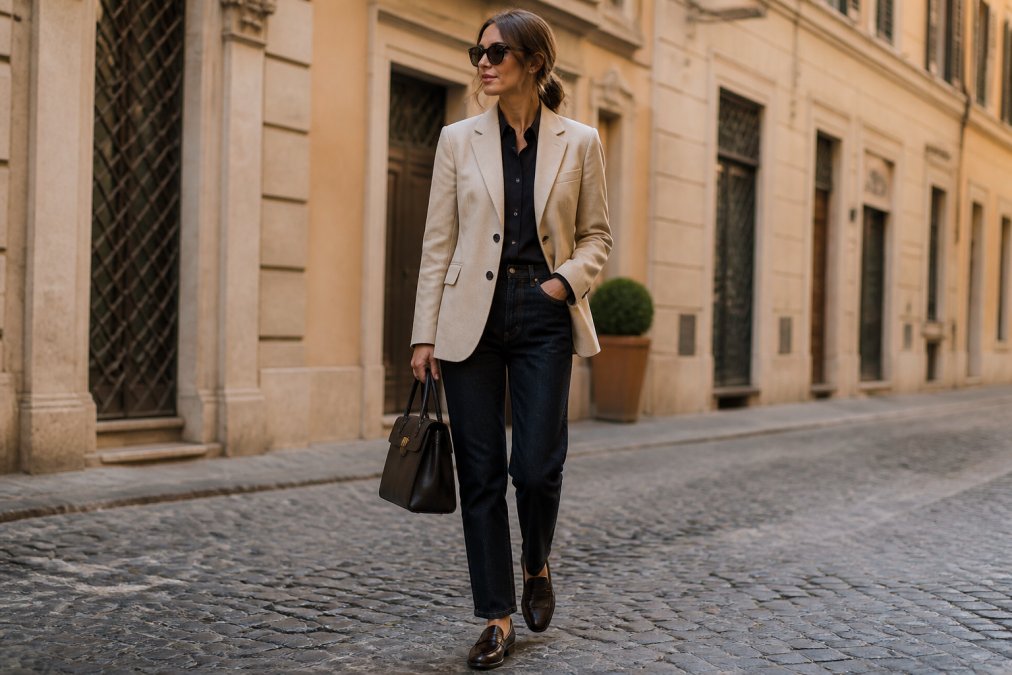
Italian street style is a fashion philosophy built on relaxed confidence, precise tailoring, and the deliberate rejection of obvious effort. Italian street style is the art of looking polished without appearing to have tried, where a single well-cut blazer does more work than an entire outfit of statement pieces. The what is italian street style aesthetic question has a simple answer at its core: it is nonchalance, executed with intention.
That intention shows up in fit first, color second, and accessories last. Nothing about the look is accidental, even when it reads as spontaneous.
Effortless Chic and the Art of Nonchalance
Effortless chic is the discipline of removing one element before you leave the house. A common mistake is adding a belt, a scarf, and a bold bag to an outfit that already had a strong jacket. Italian street fashion rewards restraint: one focal point, everything else supporting it.
Color Palettes and Neutral Tones
Neutral tones form the backbone of the aesthetic. Cream, camel, charcoal, navy, and chocolate brown mix without clashing, which lets texture and silhouette carry the visual interest. A monochromatic base in one of these shades, broken by a single leather accessory, is the fastest route to the look.
How to Dress Like an Italian Woman: A Step-by-Step Guide
Dressing in this aesthetic comes down to building a small wardrobe of classic staples and then mixing price points so the outfit never reads as a single-store purchase. The steps below take an afternoon to plan and years to refine, and they apply whether you are shopping for women's or men's fashion, since the underlying principles are the same.
Step 1: Build a Capsule Wardrobe of Classic Staples
Start with pieces that work in any combination:
- A tailored blazer in a neutral tone
- A trench coat that hits mid-calf
- Dark, straight-leg denim
- A silk or fine-knit top
- Leather loafers or low heels
- One structured handbag
These six items alone generate more than a dozen outfits. Quality over quantity matters more here than anywhere else in your closet.
Step 2: Get the Fit Right Before You Buy Anything Else
Fit is the variable that separates a polished outfit from a costume, and it is measurable. A blazer should close at the button without pulling across the chest, and the shoulder seam should land at the edge of your shoulder bone, not past it. Trousers should break once at the ankle, not pool. Sleeves should end at the wrist bone so a half-inch of shirt cuff shows when you move.
If a garment fails any of those tests off the rack, it is a tailoring candidate, not a rejection. A common pattern among people who dress well on a budget is buying one size up and spending the difference at a tailor.
Step 3: Master the High-Low Mix
Pair one investment piece with accessible basics. A sharp blazer over a simple tee, or tailored trousers with a plain knit, keeps the outfit grounded. The high-low mix is what separates street fashion from a runway re-creation.
A practical way to budget this: spend the most on the pieces that touch your silhouette most often, outerwear, shoes, and bags, and spend the least on the pieces that wear out fastest or trend hardest, like knit tops and denim. Outerwear and leather goods are the categories where cost-per-wear math favors spending more up front.
Pro Tip
Check the seam allowance and button stitching on any blazer before buying. A well-made jacket has at least a half-inch of fabric inside the seam, which means a tailor can adjust the fit later. Fast-fashion jackets rarely leave enough room.
Step 4: Apply the Same Rules Across Genders
Most guides frame this aesthetic as women's fashion, but the tailoring principles are gender-neutral. Men's versions of the look tend to run darker and leaner: sharper shoulders, fewer accessories, and fit doing nearly all the talking. Women's versions allow more layering and textural play. Both rest on the same foundation, neutral palette, natural fibers, and a tailor who knows your measurements. If you are building a wardrobe for a household rather than one person, the capsule list above works for both, with the blazer and trouser cuts adjusted to the wearer.
Luxury Streetstyle Trends for 2026
Luxury streetstyle trends for 2026 lean into texture and restraint rather than logos. The direction is quieter than previous seasons, and that favors anyone building a wardrobe around investment pieces.
Textural Contrast and Layering
Layering works best when the fabrics disagree with each other.
Monochrome and Refined Silhouettes
Single-tone dressing returns in 2026, with refined silhouettes doing the heavy lifting.
| Trend | What It Looks Like | Best For |
|---|---|---|
| Textural contrast | Leather plus knit, suede plus cotton | Cooler months, evening |
| Monochrome | One shade, varied proportions | Work, travel, dinners |
| Refined silhouette | Long coat, wide trousers | Everyday polish |
The Role of Tailoring, Fit, and Fabric Quality
Tailoring is what makes an inexpensive garment look expensive and an expensive garment look cheap when it's missing.
Why Fit Beats Brand
A jacket that fits at the shoulders but is loose at the waist will always look borrowed, no matter what the label says.
Watch Out
Skipping a tailor is the most common mistake. If you only ever pay for one alteration in your life, make it the waist suppression on your most-worn blazer.
How to Identify Quality Fabric by Touch and Label
Then use your hands:
- Wool: Squeeze a fistful and release. Good wool springs back with few creases. If it stays crumpled, it is either a low-grade wool or heavily blended with synthetic fiber.
- Cotton: Look for a tight, even weave with no visible gaps when held to light. Loosely woven cotton wrinkles aggressively and wears through at stress points.
- Linen: Some wrinkle is the point. What you are checking for is slubs, small thick spots in the yarn, which are normal in linen and a sign of natural fiber rather than a defect.
- Silk: It should feel cool and slightly dry, not slick. If it feels like plastic, it probably is.
- Leather: Press a thumbnail into the surface. Real leather shows a fine, irregular grain and springs back. Corrected-grain or bonded leather shows a uniform, printed pattern and does not recover.
Reading Construction, Not Just Fiber
- Lining: A full lining in a smooth fabric (cupro, viscose, or silk) signals a garment built to last. Unlined or half-lined jackets can still be good, but check the interior seams for finishing.
- Seam allowance: At least a half-inch inside the seam gives a tailor room to work. Less than that and the garment is effectively disposable.
- Buttons: Natural materials like horn or corozo feel cool and have subtle color variation. Plastic buttons feel warm and uniform, not a dealbreaker, but a useful signal about the rest of the construction.
- Stitching density: More stitches per inch generally means a stronger seam. Compare the stitching on a garment you already own and love against the one you are considering.
Where to Spend and Where to Save
Apply the fabric test hardest to the pieces closest to your body and most visible: outerwear, trousers, and shoes.
Essential Accessories and Leather Details
Leather accessories do the finishing work in Italian street fashion.
Sustainable and Vintage Sourcing for an Authentic Look
Vintage sourcing is one of the fastest routes to an authentic aesthetic, and it solves a problem most guides ignore: individuality.
Men's vs. Women's Nuance in Italian Street Fashion
The aesthetic plays out differently across genders, and the difference is worth understanding.
Key Takeaway
The throughline across every element is intention. Italian street style looks effortless because the wearer removed the extras, not because they stopped caring.
Frequently Asked Questions
What are the core elements of the Italian street style aesthetic?
The Italian street style aesthetic is built on a few key principles: quality over quantity, a neutral color palette (think beige, navy, and cream), and impeccable tailoring. It's about looking polished but effortless. Key pieces include a blazer, trench coat, leather accessories, and classic staples like a white shirt. The look favors timeless elegance over flashy trends, focusing on silhouette and fabric quality.
How does Italian street style differ from American streetwear?
Italian street style leans toward sophistication and refined tailoring, while American streetwear often emphasizes casual, athletic, or logo-heavy looks. Italian style prioritizes a polished, 'effortless chic' vibe with a focus on quality fabrics and neutral tones. American streetwear might feature sneakers, hoodies, and bold graphics. The Italian aesthetic is more about understated luxury and individuality rather than following mass-market trends.
How can I incorporate Italian street style into my daily wardrobe?
Start by investing in a few versatile, high-quality pieces: a well-fitted blazer, a trench coat, and a pair of leather loafers or boots. Build a capsule wardrobe around neutral tones like black, navy, and beige. Mix high-end items with affordable basics to create a high-low mix. Add leather accessories like a structured bag or belt. Focus on fit and fabric quality, and keep your look clean and uncluttered.
What colors and fabrics define the Italian fashion aesthetic?
Italian fashion aesthetics favor a neutral palette: black, navy, beige, cream, gray, and white, with occasional pops of color like red or green. Fabrics are key: natural fibers like wool, silk, linen, and cashmere are preferred for their drape and longevity. Leather is essential for accessories. The emphasis is on quality and how the fabric moves, creating a refined, sophisticated look that stands out through texture and tailoring.
The hard part isn't knowing the rules, it's finding pieces that hold up to them. ETHOS CONCEPT builds for exactly that gap, with the Atelier Line of limited-edition designs and a curated selection that pairs elegance with genuine affordability. Shoppers get free shipping on orders over $150, and every piece is chosen to express individuality rather than follow a mass-market trend. Get started with ETHOS CONCEPT and build a wardrobe that looks considered from the first wear.