

Table of Contents
- Nasty Gal vs Magnolia Boutique: Two Aesthetics, Two Approaches
- Side-by-Side Style Comparison: Grunge Edge vs Feminine Curated
- Price Point and Cost-Per-Wear: Where the Real Value Sits
- Sizing Inclusivity, Fit Guides, and Return Policy Compared
- Why Slow Fashion Is Better for Your Budget Long-Term
- How to Build a Capsule Wardrobe on a Budget With Either Aesthetic
- Age-Appropriateness and Trend-Driven vs Timeless Pieces
- Conclusion
- Frequently Asked Questions
Last Updated: September 30, 2026
Nasty Gal vs Magnolia Boutique: Two Aesthetics, Two Approaches
The nasty gal vs magnolia boutique styles debate comes down to one question: do you want to dress like a rock star or a romantic lead? This comparison from ETHOS CONCEPT breaks down both aesthetics so you can shop with a clear head. Nasty Gal leans grunge, edgy, and trend-driven. Magnolia Boutique leans feminine, curated, and soft. Neither is wrong. They simply serve different versions of you.
Here's what most style guides get wrong: they treat these as interchangeable fast-fashion labels and skip the details that actually matter. Fabric quality, garment construction, and cost-per-wear decide whether a piece lasts one season or five. Below, we compare both aesthetics side by side, then show you how to build a capsule wardrobe that works with either one.
Side-by-Side Style Comparison: Grunge Edge vs Feminine Curated
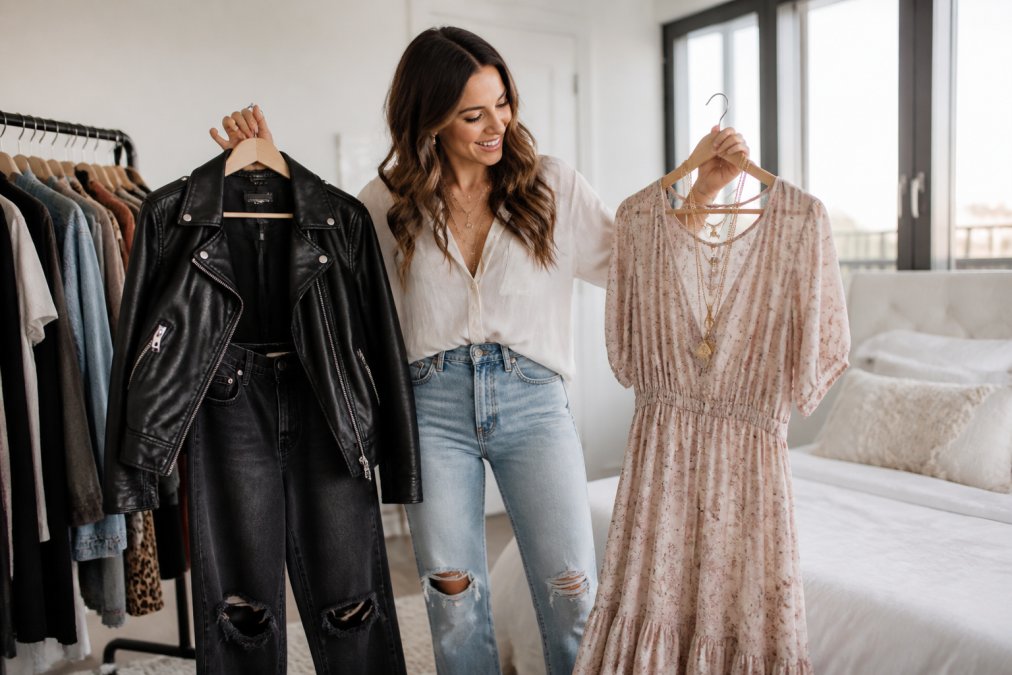
Think of Nasty Gal as leather jackets, ripped denim, graphic tees, and vintage-style band references. Magnolia Boutique reads as flowy midi dresses, delicate jewelry, pastel palettes, and heritage-inspired romantic details. One is a downtown rooftop; the other is a garden brunch.
Fabric Composition and Garment Construction Differences
Grunge-inspired pieces often rely on heavier fabrics: coated denim, faux leather, chunky knits. Feminine curated pieces favor lighter weaves: chiffon, cotton voile, satin blends. Construction tells the real story. Check stitch density, seam finishing, and whether buttons are plastic or metal. A common mistake is judging a garment by its product photo alone. Zoom in on the fabric close-ups before you buy. Material durability lives in those details, not in the marketing copy.
Price Point and Cost-Per-Wear: Where the Real Value Sits
Cost-per-wear is the price of a garment divided by the number of times you actually wear it. A $40 trend piece worn twice costs $20 per outing. A $120 staple worn 40 times costs $3 per outing. The cheaper garment is the more expensive one. That single calculation is the most useful tool in this entire comparison, and it is the one most style guides skip.
How the Two Approaches Price Out
Trend-driven fast fashion keeps the sticker price low by using lighter fabrics, simpler construction, and shorter production cycles. The trade-off shows up later: higher replacement rates, more frequent pilling and fading, and a shorter useful life per garment. Curated boutique pieces often carry a higher upfront price because of better fabric, more construction steps, and smaller production runs, but they tend to stay in rotation longer.
Neither approach wins on price alone. The winner depends on how many times you wear the piece. A useful way to frame it:
| Factor | Trend-Driven Approach | Curated Approach |
|---|---|---|
| Upfront price | Lower | Higher |
| Typical useful life | One to two seasons | Multiple seasons |
| Replacement rate | Higher | Lower |
| Cost-per-wear at high frequency | Can be low if worn often | Usually lower |
| Cost-per-wear at low frequency | Often high | Often high |
| Best for | Statement or short-cycle trends | Wardrobe staples and repeat wear |
The table makes the real point: frequency of wear, not price tag, drives value. A $25 top you wear weekly beats a $200 dress you wear once.
Running the Math on a Real Purchase
Here is a simple framework you can apply at checkout:
- Estimate how many times you will realistically wear the piece in the next 12 months. Be honest, most people overestimate.
- Divide the price by that number. That is your cost-per-wear for year one.
- Add expected care costs: dry cleaning, repairs, or replacement of a failed zipper.
- Compare that number against a similar piece you already own and wear often.
A common pattern: shoppers buy three or four cheap versions of the same item over two years instead of one better version. The total spend is often higher, and the wardrobe is cluttered with pieces that never quite fit right.
Shipping, Returns, and the Hidden Costs
Shipping and returns are part of the real price. A low sticker price with a paid return label and a restocking fee can erase the savings on the first return. Watch for:
- Restocking fees. Some retailers deduct a percentage of the refund when you return an item.
- Return windows. Fourteen days is common; thirty days is generous. Miss the window and you own the item.
- Who pays return shipping. A prepaid label is not the same as free returns, some retailers deduct the label cost from your refund.
- Free-shipping thresholds. A threshold can push you to add an item you did not need just to hit the minimum. That is not a saving.
The FTC's guidance on online return and refund policies requires retailers to disclose return terms clearly, so the information should be on the product page or in the policy section before you check out.
Watch Out
A low price plus a short return window plus a restocking fee is the most expensive combination in online shopping. Confirm all three before you add to cart.
A Practical Value Checklist
Before you buy, run these five checks:
- Fiber content and care label, can you maintain it?
- Construction, are the seams finished and the hardware metal?
- Fit, does it match your measurements, not the model's?
- Return terms, window, fees, and who pays shipping.
- Wear frequency, will you reach for it at least once a month?
Five yeses is a good buy. Two or fewer is a donation waiting to happen.
Key Takeaway
Price is what you pay once. Cost-per-wear is what you pay every time you get dressed. Shop the second number.
Sizing Inclusivity, Fit Guides, and Return Policy Compared
Size inclusivity and fit accuracy decide whether an online boutique earns repeat customers. A detailed size chart with garment measurements beats a generic S/M/L grid every time. The FTC's guidance on online return and refund policies requires retailers to disclose return terms clearly, so read the fine print before checkout.
When you order online, measure yourself against the garment specs, not the model's height. A try-on haul video helps, but your own tape measure helps more.
Skipping the return policy is the fastest way to lose money on an online order. Some retailers charge restocking fees or require returns within 14 days. Confirm the window and who pays return shipping before you add to cart.
Why Slow Fashion Is Better for Your Budget Long-Term
Slow fashion is a buying approach that prioritizes fewer, higher-quality pieces over constant trend chasing. Many shoppers find that replacing cheap garments every few months costs more than investing in pieces that last. Fast-fashion tempts with low upfront prices, but the replacement cycle eats the savings.
How to Build a Capsule Wardrobe on a Budget With Either Aesthetic
Building a capsule wardrobe on a budget starts with a fixed list, not a shopping spree. Pick 20 to 30 pieces that mix and match across seasons. Then buy only within that list.
- Choose your core aesthetic: grunge edge or feminine curated.
- List 5 tops, 4 bottoms, 2 dresses, 2 outerwear pieces, and 3 shoe options.
- Pick a neutral base palette, then add 2 accent colors.
- Set a per-piece spending cap and stick to it.
- Check fabric composition before buying.
- Fill gaps with one statement piece per season.
- Rotate and repair instead of replacing.
Pro Tip
Buy your statement pieces secondhand or from limited-edition drops. A curated collection like the Viadellerose line gives you a distinctive piece without the mass-market price.
Age-Appropriateness and Trend-Driven vs Timeless Pieces
Age-appropriateness is a myth in the sense that no rulebook exists. What matters is proportion, fit, and confidence. A 45-year-old in a leather jacket looks sharper than a 25-year-old in the same jacket if the fit is better. Trend-driven pieces date fast. Timeless pieces, like a well-cut blazer or a quality midi dress, outlive every season.
Conclusion
Choosing between these two aesthetics is really a choice about how you want to spend. Trend-driven buys feel exciting at checkout. Timeless pieces feel exciting for years. At ETHOS CONCEPT, we built our collections around that second idea: bold streetstyle and an Atelier Line of limited-edition pieces. If you want a wardrobe that earns its cost-per-wear, start with pieces you will actually reach for.
Frequently Asked Questions
What are the primary style differences between Nasty Gal and Magnolia Boutique?
Nasty Gal leans toward grunge, retro-inspired, and edgy streetstyle with bold prints and trend-driven pieces. Magnolia Boutique focuses on feminine, curated collections with softer silhouettes, floral patterns, and a more polished, boutique feel. The choice depends on whether you want an edgy, fast-fashion aesthetic or a softer, curated look. Both offer casual everyday and evening wear options, but their design language and target audience differ significantly.
Is Nasty Gal considered fast fashion compared to independent boutiques?
Yes, Nasty Gal operates on a fast-fashion model with rapid trend cycles, frequent new arrivals, and lower price points. Independent boutiques like Magnolia Boutique typically release smaller, curated collections with more attention to fabric quality and garment construction. This affects cost-per-wear: fast-fashion pieces may need replacing sooner, while boutique items often last longer. Understanding this distinction helps you decide where to invest based on your wardrobe goals and budget.
How does the quality of clothing differ between mass-market retailers and boutiques?
Mass-market retailers prioritize speed and volume, often using synthetic fabrics and simplified construction to keep prices low. Boutiques focus on smaller batches, better fabric quality, and more detailed garment construction. Material durability and fit consistency tend to be higher at boutiques, though not always. Checking fabric composition labels and customer reviews for sizing feedback helps you judge quality before buying online.
How do I determine which clothing aesthetic suits my personal brand?
Start by identifying the moods and settings you dress for most: casual everyday, professional, evening wear, or a mix. Nasty Gal suits bold, trend-driven, grunge, and retro-inspired looks. Magnolia Boutique fits feminine, curated, and heritage-inspired styles. Build a capsule wardrobe with 3-5 core pieces from your chosen aesthetic, then add seasonal trends. This approach keeps your wardrobe cohesive and reduces impulse buys that don't match your personal style.