

Table of Contents
- Why Italian Fashion Works for Petite Frames
- Petite Capsule Wardrobe Essentials for Italian Style
- How to Style Monochromatic Outfits for Petite Frames
- Best Tailoring Tips for Petite Women
- Footwear and Accessories for Cobblestone Streets
- Seasonal Packing: Breathable Fabrics for Spring and Summer
- Sustainable and Vintage Italian Shopping for Petite Sizes
- Frequently Asked Questions
Last Updated: September 12, 2026
Why Italian Fashion Works for Petite Frames
Italian fashion works for petite frames because it prioritizes proportion over height. An Italian fashion guide for petite women starts with a simple truth: the goal is not to look taller, but to look balanced. Italian style relies on clean lines, a narrow color palette, and precise tailoring, all of which flatter smaller frames.
The logic is easy to follow. A single-color outfit creates one unbroken vertical line, so the eye travels from shoulder to shoe without interruption. That creates visual height without heels. Italian designers also favor high-waisted, tapered trousers and midi dresses that sit above the ankle, both of which change where the body appears to end. This guide breaks down the pieces, fabrics, and alterations that make the approach work in practice.
Petite Capsule Wardrobe Essentials for Italian Style
A petite capsule wardrobe for Italian style is built around a short list of versatile pieces that work together in dozens of combinations. Most women need fewer items than they think. A common approach is ten to fifteen core pieces that all share a neutral palette, which makes outfit coordination almost automatic.
The core list usually includes:
- High-waisted tapered trousers in black, navy, or cream
- Two midi dresses with a defined waist
- A tailored blazer that ends at the hip
- Three elevated basics in breathable fabrics
- One structured leather bag
- Heeled ankle boots and one pair of flat leather loafers
Pro Tip
Buy the trousers first. Once you have a pair that fits your waist and hip correctly, every other piece can be matched against that fit, which saves hours of guesswork later.
Key Pieces That Add Visual Height
The pieces that add the most visual height are the ones that create vertical lines. Tapered trousers with a high waist do this best. A monochromatic base layer does the same job. Layering a long, open cardigan or a single-breasted blazer over a matching column of color keeps that line intact.
Avoid horizontal breaks at the widest part of your body. A belt in a contrasting color, a cropped jacket that ends mid-hip, or a wide horizontal stripe all cut the silhouette in half. The Italian aesthetic favors subtle detail over loud contrast for exactly this reason.
How to Style Monochromatic Outfits for Petite Frames
Styling monochromatic outfits for petite frames means choosing one color family and varying only the texture. A cream silk blouse, cream wool trousers, and cream leather shoes read as a single column. The texture changes keep the look from feeling flat, but the color stays constant.
Three rules keep it working:
- Keep the shoe close to the trouser color
- Match the bag to the outfit, not against it
- Add contrast only at the face, with jewelry or a scarf
This is where many women go wrong. They build a beautiful tonal outfit and then add a bright handbag that breaks the line at the hip. The fix is simple: treat accessories as part of the column, not separate from it.
Best Tailoring Tips for Petite Women
The best tailoring tips for petite women start with one principle: fit beats size. Off-the-rack clothing is cut for an average height, so almost every piece needs at least one adjustment. A tailor can shorten a hem, take in a waist, or raise a shoulder seam, and the difference in how the garment reads is immediate.
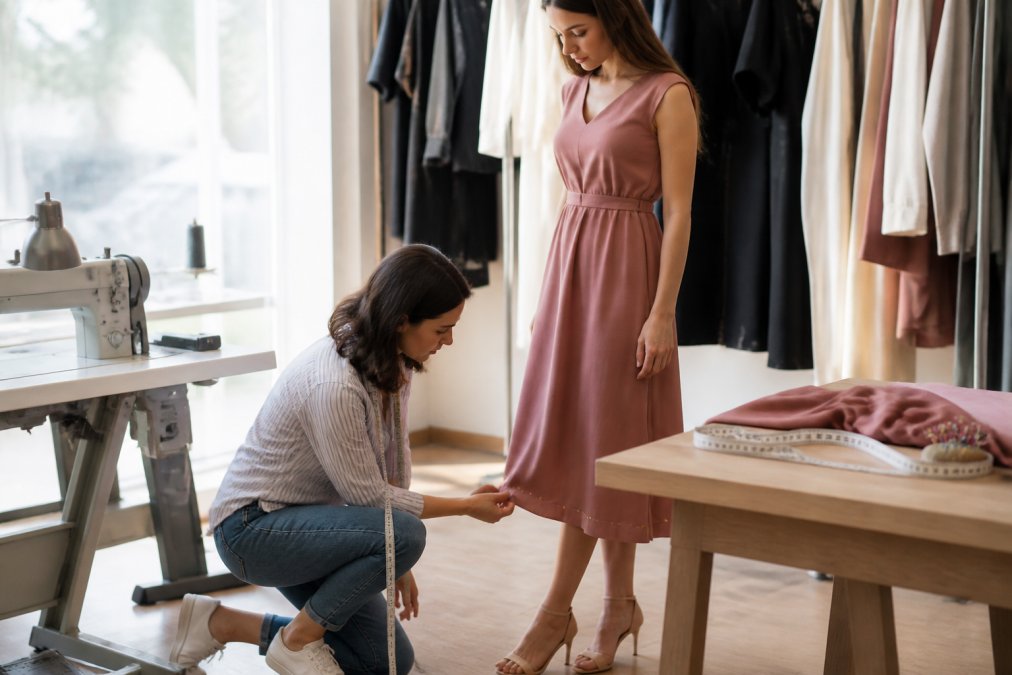
Simple Alterations That Transform Fit
Four alterations deliver the biggest change for the least cost:
- Hemming trousers to just above the shoe
- Taking in the waist of a midi dress
- Shortening sleeves to the wrist bone
- Raising a shoulder seam by a small amount
Watch Out
Skipping the hem on trousers is the most common mistake. A pair that pools at the ankle adds visual weight and shortens the leg line, which undoes the entire point of the outfit.
Footwear and Accessories for Cobblestone Streets
Footwear for cobblestone streets needs a stable sole, a modest heel, and a construction that absorbs uneven ground. The physics matter more than the style: a thin stiletto concentrates body weight on a point roughly the size of a pencil eraser, which is why it catches in the gaps between stones and rolls. A block heel of at least one inch in diameter spreads that load across a wider surface, and a wedge distributes it further still (aofas.org).
Three construction details separate shoes that survive a day on stone from shoes that do not:
- Sole thickness and material. A rubber or rubber-and-leather sole of at least a quarter inch absorbs shock from irregular surfaces. Paper-thin leather soles transmit every stone edge straight to the ball of the foot.
- Heel height and base. A heel between one and two and a half inches with a base of at least one square inch is the practical sweet spot. Anything taller than three inches on cobblestone shifts your weight forward and makes the ankle work overtime.
- Ankle support. A bootie or an ankle-strap shoe keeps the foot from sliding sideways when the sole lands on a rounded stone. A backless mule or a slide offers no lateral hold and is a poor choice for a full day of walking.
For a petite frame, the heel height also serves a proportion purpose. A one-and-a-half to two-inch block heel adds visual length to the leg without pushing the body's center of gravity so far forward that posture suffers. Heeled ankle boots handle this best because they pair with both tapered trousers and midi dresses, which means one pair covers most of a trip's outfits.
Bring two pairs, not one. A flat leather loafer or a low-profile sneaker in a color close to your trousers gives your feet a recovery day and keeps the vertical line intact. Rotating shoes also lets each pair dry out, which matters in humid weather.
Pro Tip
Break in new leather shoes for at least a week before a trip. Cobblestone amplifies every rub point, and a blister on day one can sideline the rest of the itinerary.
Accessorizing follows the same proportion logic. A structured bag that sits at the hip or higher keeps the silhouette clean; a bag that hangs at mid-thigh adds a horizontal break where you least want one. Long pendant necklaces draw the eye downward in a single line, while chunky layered necklaces add width at the chest. For the Italian aesthetic, fewer accessories in better materials beat a large collection of trend pieces, one good leather bag and one pair of quality earrings will outwork a drawer full of costume jewelry.
Seasonal Packing: Breathable Fabrics for Spring and Summer
Packing light for spring and summer comes down to fabric selection, and most guides stop at "wear linen." The real question is which fiber, at which weight, handles heat and humidity without overwhelming a small frame. That is the gap this section fills.
The fiber trade-offs.
- Linen breathes better than any common fiber because the flax fiber is hollow and wicks moisture away from the skin. The downside is wrinkle. A linen garment creases at every bend, and on a petite frame a heavily creased garment can look sloppy rather than relaxed. A linen-cotton blend (roughly 55/45) keeps most of the breathability and cuts the wrinkle significantly.
- Cotton is comfortable and holds shape better than linen, but a heavy cotton poplin traps heat. Look for cotton voile or cotton lawn, which are lighter weights that drape without bulk.
- Silk regulates temperature well and packs down to nothing, but it shows sweat and stains easily. A silk-cotton blend is more forgiving for travel.
- Synthetic blends (polyester with a small percentage of elastane) resist wrinkles and dry fast, which matters if you are hand-washing in a hotel sink. The trade-off is breathability: a high-polyester fabric can feel clammy in humid heat. A blend with at least 60 percent natural fiber is the better compromise.
Why fabric weight matters more on a petite frame. A heavy fabric adds visual and physical bulk. On a smaller frame, a stiff, thick garment can swallow the body and erase the waistline. Aim for fabrics in the light-to-medium range, roughly 4 to 7 ounces per square yard for tops and dresses. If you can pinch the fabric and it holds a sharp crease, it is likely too heavy for summer travel.
A short seasonal packing list built around these principles:
- Two midi dresses in linen-cotton or cotton lawn
- One pair of high-waisted tapered trousers in a lightweight wool blend or cotton twill
- Two elevated basics in silk-cotton or fine cotton
- One lightweight blazer in an unlined cotton or linen blend
- Heeled ankle boots and flat leather loafers
Key Takeaway
For a warm-weather trip, pack around three colors only. Every piece should match every other piece, which cuts the number of items you need and keeps outfit coordination fast. Test each fabric by crumpling a corner in your hand, if it springs back smooth, it travels well; if it stays creased, leave it home.
One more mechanism worth knowing: natural fibers breathe, but they also absorb. In high humidity, a natural-fiber garment can feel damp against the skin. A small percentage of a performance fiber (under 40 percent) in a blend helps the fabric move moisture to the surface where it can evaporate, without sacrificing the hand-feel that makes a garment look polished.
Sustainable and Vintage Italian Shopping for Petite Sizes
Sustainable and vintage shopping rewards petite shoppers more than most people realize. Older garments were often cut with more generous seam allowances, which gives a tailor room to adjust the fit. A vintage piece in a quality fabric can be altered into something that fits better than anything new off the rack.
Look for three things when shopping vintage: a fabric with weight and structure, a seam allowance you can let out, and a silhouette that already sits near your proportions. The Federal Trade Commission guidance on textile and care labeling explains what fiber and care information sellers must disclose, which helps you judge quality before you buy. For new pieces, checking the Textile Exchange materials overview gives useful context on how different fibers are sourced and how they wear over time.
ETHOS CONCEPT builds its collections around this idea of versatile, well-made pieces that hold up to repeated wear. The Atelier Line features limited-edition designs for women who want bold streetstyle without the mass-market look, and free shipping on orders over $150 makes it easier to build a capsule in one delivery.
Frequently Asked Questions
What is the 3-3-3 rule for clothes?
The 3-3-3 rule is a packing strategy: three tops, three bottoms, and three pairs of shoes that mix and match. For petite women, choose a neutral palette and consistent silhouettes so every combination works. This creates nine outfits from nine items, saving suitcase space. It aligns with Italian minimalist style and helps you pack light while staying polished.
How to dress in Italy so you don't look like a tourist?
Skip athletic wear and flip-flops. Instead, wear tailored pieces like midi dresses, tapered trousers, and heeled ankle boots. Stick to a neutral palette and add one bold accessory. Layering with a lightweight scarf or structured bag elevates the look. Italian fashion favors smart casual and elevated basics, so choose wrinkle-resistant fabrics that transition from day to night.
What is the best dress style for petite women?
Midi dresses with vertical lines or wrap styles that cinch at the waist work best. Avoid overwhelming prints and heavy fabrics. A monochromatic dress in a dark neutral creates an unbroken line, adding visual height. Tailoring is key: hem to just above the knee or mid-calf, and ensure the waist hits at your natural waistline for flattering proportions.
What do Italian women over 50 wear?
Italian women over 50 favor sophisticated, tailored pieces like high-waisted tapered trousers, silk blouses, and structured blazers. They invest in quality fabrics and timeless accessories. For petite frames, the same principles apply: focus on fit, choose monochromatic outfits, and add heeled ankle boots for comfort and height. Layering with a cashmere scarf or a leather bag completes the look.
How can petite women incorporate Italian tailoring into their daily wardrobe?
Start with a few key alterations: hem trousers to your ideal length, take in waistlines, and shorten sleeves. Choose garments with vertical lines and high-waisted cuts. Build a capsule wardrobe of neutral, breathable fabrics. Then add Italian-inspired accessories like a silk scarf or leather belt. Tailoring ensures every piece fits your proportions, making you look taller and more polished.
Building a wardrobe that flatters a petite frame takes planning, but the payoff is a closet where nearly everything works together. The challenge is finding pieces that already respect proportion, so you spend less time and money on alterations. ETHOS CONCEPT offers the Atelier Line of limited-edition designs, a curated mix of elegant and affordable pieces, and free shipping on orders over $150. Add to cart and start building a wardrobe that fits the way it should.