

Table of Contents
- The Touch Test: Tactile Indicators of Quality
- Signs of High Quality Clothing: What to Feel For
- How to Identify Fabric Fiber Content by Touch
- Visual Cues for Fabric Assessment
- Understanding Weave and Knit Structure
- Post-Wash Performance: The Real Durability Test
- Budget-Friendly vs. Luxury Tactile Markers
- Frequently Asked Questions
Last Updated: September 23, 2026
The Touch Test: Tactile Indicators of Quality
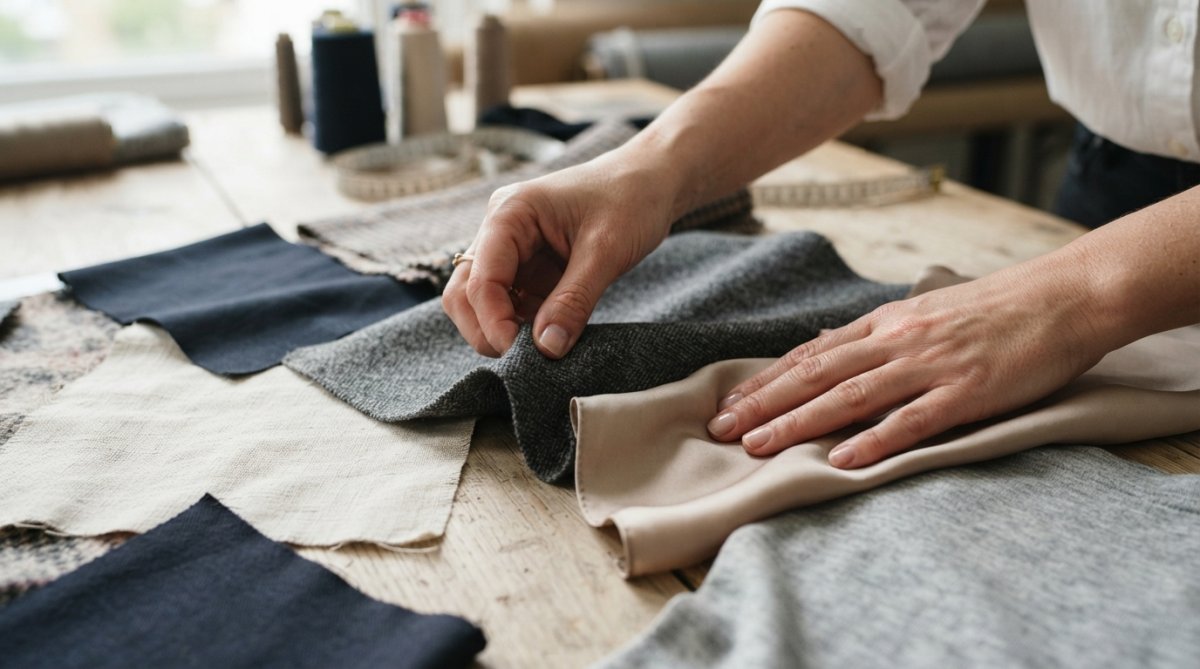
The most reliable way to assess fabric quality happens the moment you touch it. Your hands can detect what your eyes miss: the density of fibers, the consistency of weave, the resilience of construction. At ETHOS CONCEPT, we've learned that understanding how to tell if fabric is high quality by touch separates savvy shoppers from those who get disappointed after the first wash.
Premium fabric has weight, structure, and confidence in your palm. Budget fabrics feel thin, flimsy, or plasticky, the difference is obvious once you know what to look for.
Softness vs. Crispness: What Texture Tells You
Softness alone doesn't signal quality. Look for balance between softness and structure. High-quality natural fibers like cotton and linen feel smooth and refined without slipperiness, holding their shape. Budget fabrics feel either too stiff or too limp.
Crispness in premium fabrics comes from tight weaving and quality fiber, they crease cleanly and return to shape. Run your fingers across the surface: premium fabric has even texture with no rough spots; cheap fabrics have uneven areas where the weave breaks down.
Pro Tip
The "pinch test" reveals texture quality fast. Pinch a small section between your thumb and forefinger. Quality fabric feels smooth and uniform. Poor fabric feels bumpy, thin, or has visible variations in how it responds.
Drape and Weight: How Premium Fabric Moves
Pick up a garment and let it hang naturally. High-quality fabric has graceful drape and falls smoothly. Premium fabrics have substantial weight from denser weaving and quality fiber content, not chemicals or coatings. Cheap fabrics feel too light and fragile.
Fabric that flows easily usually breathes better than stiff alternatives. When held to light, quality fabric shows even light penetration; poor fabric blocks light unevenly or feels transparent in patches.
Signs of High Quality Clothing: What to Feel For
Beyond the raw fabric, examine the construction itself. This is where you separate well-made pieces from ones that'll fall apart after a few wears.
Seams, Hems, and Construction Details
Run your fingers along every seam. Quality seams feel smooth and even with tight, consistent stitches. Check hems carefully, premium garments have flat, secure hems with neatly finished seam allowances, not raw edges.
In quality clothing, seams are reinforced at stress points like armholes and necklines with extra stitching that prevents tearing.
Watch Out
Loose threads inside seams or hems are a red flag. They signal rushed manufacturing and suggest the garment wasn't inspected before shipping. This usually means other quality issues are hiding elsewhere.
Resilience and Recovery After Compression
Squeeze the fabric in your fist for 10 seconds, then release. Quality fabric bounces back quickly; cheap fabric stays wrinkled. This resilience predicts how the garment will look after normal wear.
How to Identify Fabric Fiber Content by Touch
You can't always trust the label. Learning to identify fiber content by touch gives you real insight into quality and performance.
Natural Fibers: Cotton, Silk, Linen, and Wool
Cotton feels soft and breathable with warm, natural texture and no static. It wrinkles easily, which is normal.
Silk feels smooth and cool with subtle sheen and beautiful drape. It's delicate, so rough handling damages it quickly.
Linen feels crisp and textured, stiffer initially but softens with washing. It breathes exceptionally well with visible fiber texture, characteristic of quality linen, not a defect.
Wool feels warm and slightly textured. Quality wool is soft, not scratchy. Cheap wool feels harsh and uncomfortable. Wool naturally resists wrinkles and recovers from compression better than most fabrics.
Synthetic Fibers: Polyester, Nylon, and Blends
Polyester feels slippery and cool with slight sheen. It doesn't breathe well and can feel clammy. Quality polyester blends feel better than pure polyester.
Nylon feels smooth and strong but doesn't breathe well and often feels plasticky. Quality nylon blends feel softer and more natural.
Blends combine the strengths of different fibers. A cotton-polyester blend might feel softer than pure polyester while being more durable than pure cotton. The best blends balance breathability, durability, and comfort.
Key Takeaway
Natural fiber blends usually feel better than pure synthetics. A 70% cotton, 30% polyester blend often outperforms 100% polyester in comfort and longevity, even though the polyester adds durability.
Visual Cues for Fabric Assessment
While touch is primary, visual inspection reveals construction quality and fiber durability that your hands alone cannot detect. The best assessments combine tactile feedback with specific visual markers that correlate to longevity and performance.
Pilling Resistance and Fiber Strength
Pilling occurs when short fibers tangle into balls on the surface, most in high-friction zones like underarms and collar edges. Quality fabrics resist pilling because they use longer staple fibers less prone to breakage.
Examine the fabric surface under natural light. Quality fabrics feel smooth and uniform with no visible pilling; budget fabrics show pilling within the first few wears.
Look at seams and stress points, these pill first. Pilling concentrated at seams signals weak fiber strength. Premium fabrics maintain smooth surfaces through 20+ wash cycles; budget alternatives show pilling after 5-10 wears.
Opacity, Weight Distribution, and Transparency Patterns
Hold the fabric to bright light. Quality fabrics show even light penetration; poor fabrics show uneven transmission with bright spots (loose weave) and dark spots (bunched fibers). Quality garments maintain opacity without excessive weight.
Quality dyed fabrics show uniform color throughout. Cheap fabrics display color variation, lighter patches or darker seams, signaling poor dye-bath control.
Surface Finish and Manufacturing Defects
Quality fabrics have refined, consistent finish with no rough patches or visible defects. Look for manufacturing flaws: pulled threads, holes, uneven dyeing, or puckered seams. Multiple defects indicate the garment wasn't inspected before shipping.
Pro Tip
Compare three garments side by side in natural light: one budget, one mid-range, one luxury. Observe the opacity, surface uniformity, and color consistency. The differences become obvious and train your eye to spot quality markers instantly.
Understanding Weave and Knit Structure
Weave and knit patterns affect how fabric feels and performs. Different structures create different textures and durability levels.
Tight weaves create durability and refined feel; loose weaves feel flimsy. Knit structures vary from loose and stretchy to tight and stable. Quality knits maintain their shape after repeated wearing and washing.
Post-Wash Performance: The Real Durability Test
How fabric behaves after washing reveals true quality in ways no touch test can fully predict. This is where budget pieces fail catastrophically and premium fabrics prove their value. Learning to assess post-wash durability before purchase separates informed shoppers from those who discover problems after the first wash.
Pre-Purchase Swatch Testing: The Gold Standard
Test a small swatch before purchasing.
Observe these specific changes:
Shrinkage: Quality fabrics shrink less than 3%; budget fabrics shrink 5-10% or more. Pre-shrunk fabrics resist shrinkage because they've been heat-treated during manufacturing.
Watch Out
If a swatch shows significant shrinkage, color bleeding, or pilling after one wash, the finished garment will degrade rapidly. Do not purchase. These are not minor flaws, they predict poor performance across 20+ wash cycles.
Fiber Content and Inherent Durability Patterns
Different fibers behave predictably after washing. Understanding these patterns helps you predict performance without testing.
Care Label Clues and Manufacturing Standards
The care label reveals how the manufacturer expects the fabric to behave. Read it carefully.
Shape Retention and Structural Integrity After Washing
Quality garments return to their original shape after washing because quality fabrics resist deformation. Budget pieces stretch out, sag, or lose structure permanently. Quality fabrics return to near-original dimensions; budget fabrics stay stretched or shrunken.
Key Takeaway
The most reliable quality indicator is how fabric performs after 5-10 wash cycles, not how it feels new. A garment that softens, maintains color, resists pilling, and holds its shape through multiple washes is genuinely high-quality. One that fades, pills, shrinks, or loses structure is not, regardless of price or brand name.
Budget-Friendly vs. Luxury Tactile Markers
You don't need to spend a fortune for quality. Understanding the tactile differences helps you find good value at any price point.
Frequently Asked Questions
How can you tell if fabric is high quality just by touching it?
High-quality fabric feels smooth, consistent, and substantial when you hold it. Press the material between your fingers, premium fabrics have a soft hand-feel without roughness, maintain their shape when compressed, and show no pilling or loose fibers. Weight matters too: quality fabrics have appropriate density for their fiber type. Run your fingers across the surface to check for even texture and tight weave density. Natural fibers like cotton and silk typically feel more refined than cheap synthetics, though quality varies within both categories.
What's the difference between natural and synthetic fabric feel?
Natural fibers like cotton, linen, and silk have a softer, more breathable hand-feel and improve with washing. They absorb moisture and feel cooler against skin. Synthetic fibers like polyester and nylon feel smoother initially but can feel plastic-like or slippery, lack breathability, and may develop pilling over time. High-quality synthetics and blends are engineered to mimic natural fiber comfort, but budget synthetics often feel stiff or clammy. Check the fiber content label, premium pieces blend synthetics with natural fibers for durability and comfort.
How does fabric weight indicate quality?
Fabric weight reflects density and durability. Heavier fabrics typically indicate tighter weave density and better construction, meaning longer lifespan and better drape. However, weight alone doesn't guarantee quality, a well-constructed lightweight linen is superior to poorly made heavy polyester. Quality pieces feel substantial but not stiff. Press the fabric: if it springs back quickly and maintains its shape, that's a sign of good resilience and tensile strength. Check the tag for weight information, and compare similar garment types to develop a feel for what's appropriate.
What tactile test can reveal whether fabric will last through multiple washes?
Test tensile strength by gently pulling the fabric in both directions, quality construction resists tearing and maintains integrity. Check seams and hems by running your fingers along them; tight, even stitching indicates durability. Examine the fabric surface for loose fibers or weak spots. After purchase, wash a small hidden area or test garment to observe colorfastness, shrinkage, and shape retention. Quality fabrics maintain their hand-feel, color, and drape after washing, while budget fabrics often become stiff, faded, or misshapen. This post-wash performance test is the most reliable indicator of true durability.